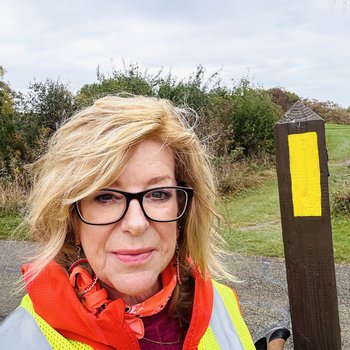
It's mid-morning in River Falls, Wisconsin, and Caroline Bong "Blaze" Jensen has already taken her teenage son, Finn, to school, walked her dog, Gunner, and answered dozens of business emails. The avid swimmer gets ready for a workout, before preparing a healthy lunch. In season, you'll see her driving her Jeep, with Gunner as co-pilot, to a local farmer's market to select fresh produce. The retired US Air Force lieutenant colonel and president of the National WASP WWII Museum keeps her weekends free to spend time with Finn.
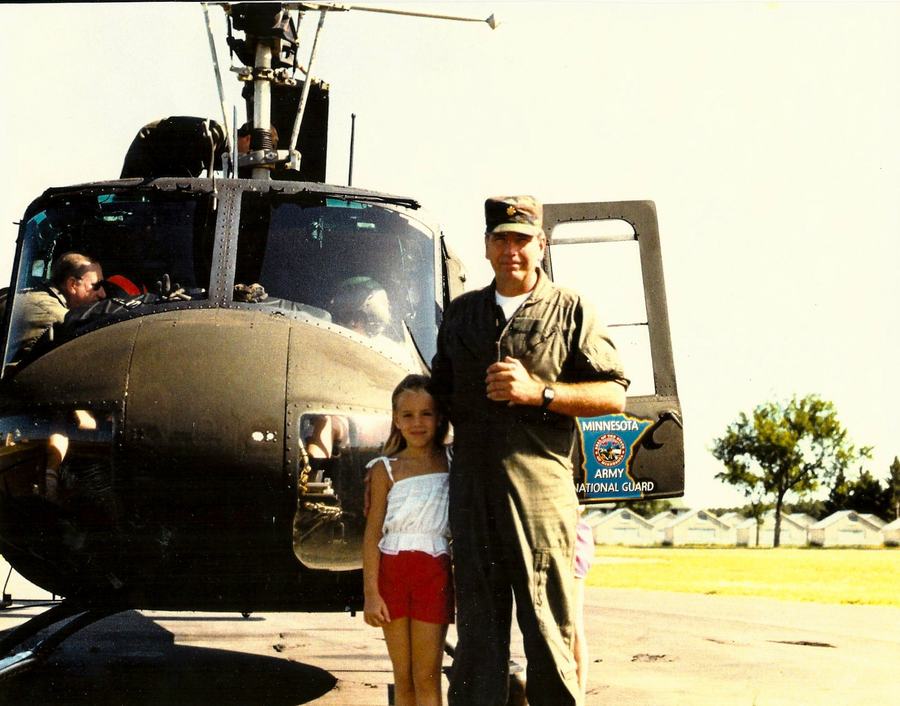
After her 26-year military career, it's a life she loves in western Wisconsin. It's a long way from the little girl born in New Richmond who saw a biplane flying around the clouds to the woman who became the first mom to fly with the US Air Force Thunderbirds. Her career choice was inspired by her grandparents and her father; growing up with patriots willing to sacrifice their personal safety and comfort to defend our country significantly influenced her life. "My grandmother on my mom's side was very proud of her service as a US Coast Guard SPAR (Coast Guard Women's Reserve)," Jensen says. "My Dad's father saw combat on the Coast Guard cutter Duane in the North Atlantic during World War II," she added. Her Marine Corps father, Tom Bong, flew 660 combat missions in H-34s during Vietnam.
Fueled by Mentorship
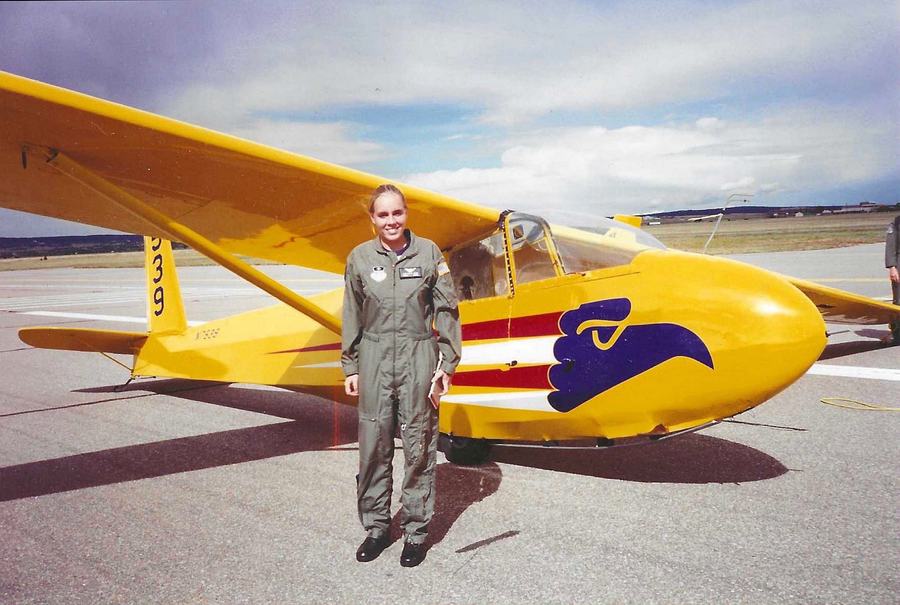
Growing up in the state of Wisconsin with the last name Bong meant that it was inevitable that Caroline would become steeped in the rich aviation history of our state. While her father was in the Minnesota National Guard he was repeatedly asked if he was any relation to the highest scoring American ace of all time, Richard Ira Bong. Despite not being a blood relative, she takes joy in sharing that Billy Mitchell, another Wisconsin aviator, is known as the Father of the US Air Force. As a freshman at the United States Air Force Academy she was assigned to Cadet Squadron 21 (CS-21), the same squadron of Milwaukee's Lance Sijan. Lance's family gifted CS-21 his cadet artifacts and Caroline was honored to be a part of designing and setting up an artifact display case in the squadron. Malcolm McConnell's book that tells Sijan's story, Into the Mouth of the Cat, was required reading there. Sijan Hall, named after the Wisconsin Medal of Honor recipient, is a huge dormitory that houses over half of the cadets at the Air Force Academy in Colorado Springs. "I had a lot to be proud of and attempt to live up to," Caroline says.
Blaze's father supported his daughter's choice of entering the US Air Force, with a caveat that she should fly something "higher and faster" than a helicopter. He not only supported her, but also found a mentor for Caroline like no other, a former Women's Airforce Service Pilot (WASP).
It's a story that lights up Caroline's beautiful face. We wish you could see her expressive eyes and big smile as she tells it. "My father worked for the Minnesota National Guard at the time. He worked in civil engineering and did site visits to armories throughout Minnesota. When he was in Faribault, Minnesota, he learned that a former WASP lived there named Elizabeth "Betty" Wall Strohfus. Back in those days, there was no Internet or cell phones. My father looked her up in the phone book and decided to knock on her door. My father is a big physical presence, especially compared to Betty Strohfus, a tiny ball of energy with a 10-foot-tall personality. When Betty answered the door, my father introduced himself and said, 'My daughter wants to be an Air Force pilot.' Betty didn't hesitate and immediately invited him in for coffee. After a long talk, she sent him home with things to motivate me on my way through high school and to become an Air Force pilot."
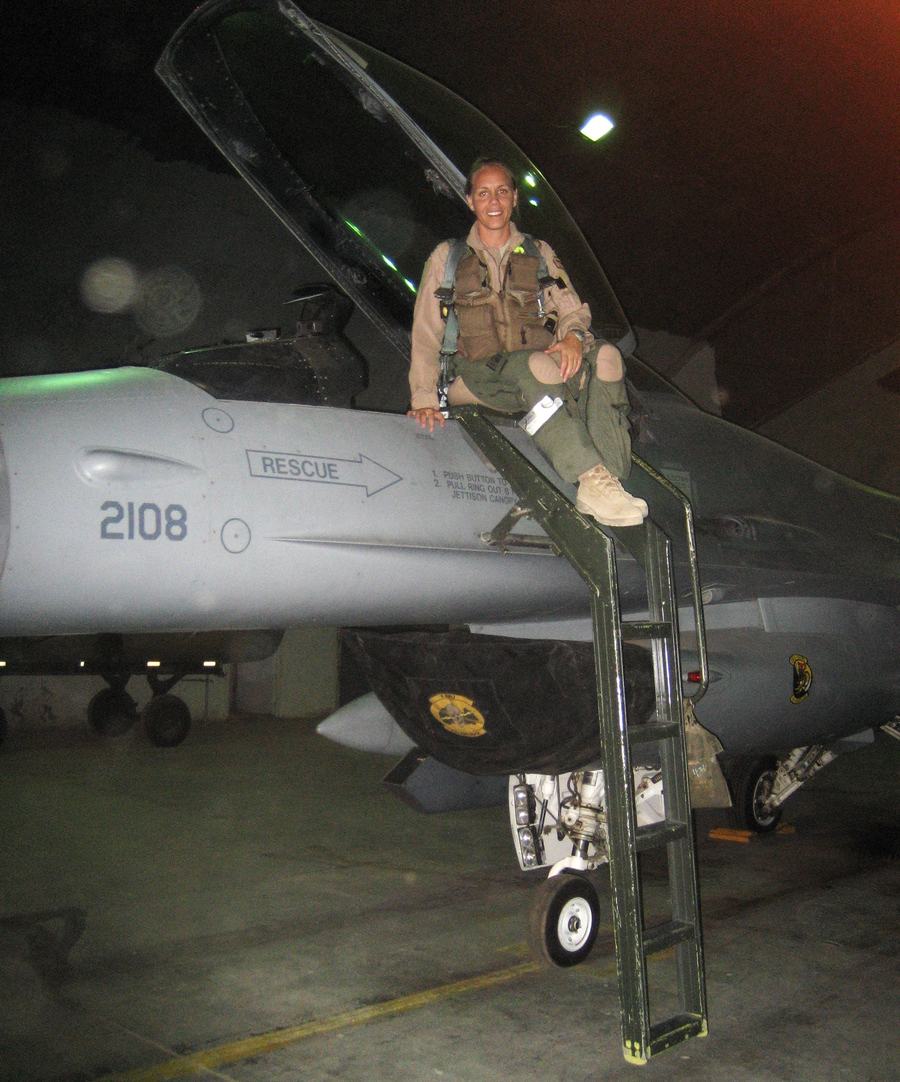
The Women Airforce Service Pilots have inspired Caroline throughout her entire career and daily life, and Betty was the first of the WASP she's been fortunate to know—as mentors and friends. Their experiences influenced her greatly as she rose through the ranks. A 1998 graduate of the USAF Academy, Blaze went from one general aviation flight in a Cessna 172 at age 15 before flying on an airliner to the academy, to becoming a fighter pilot: an experienced command pilot, instructor pilot, and evaluator with more than 3,500 hours in Schwitzer 2-33 gliders, Cessna 172, T-37B Tweet, T-38 Talon, and the F-16 Fighting Falcon, including 200 hours of combat time. She was the first female reserve officer to fly for the US Air Force Air Demonstration Squadron (Thunderbirds) and is the first woman qualified to fly in the Air Force's jet trainer, the T-7A Red Hawk.
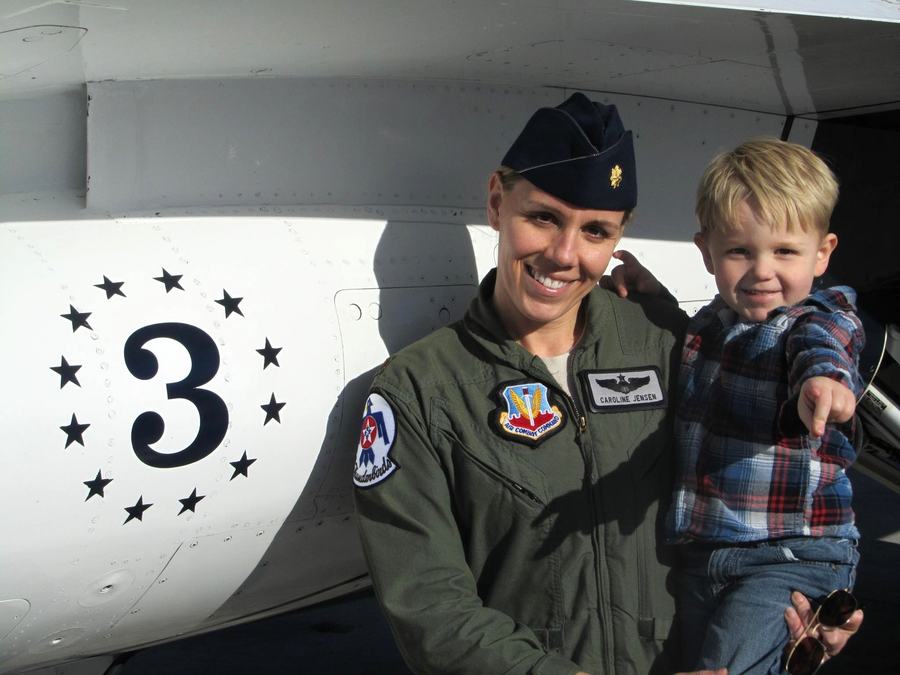
Blaze fondly remembers flying in the #3 right wing position for the Thunderbirds. Her time in OPERATION IRAQI FREEDOM supporting the US troops and US allies on the ground is memorable. Her Air Force adventure also took her to an assignment as a Legislative Fellow in the Secretary of the Air Force Legislative Liaison Senate office and later as a member of Senate Armed Service Committee.
So many accomplishments! But it wasn't without a few struggles along the way.
Caroline came home from Iraq in February of 2008. Her time there had been significant and rewarding. Her squadron, the 4th Fighter Squadron "Fightin' Fuujins" from Hill Air Force Base, Utah, flew during "The Surge" in Iraq. This meant that The United States military was allowed to meet the increasing actions of al-Qaida Iraq with equal force. Her squadron was extraordinarily competent and quickly earned an excellent reputation with the warfighters on the ground.
Shortly after returning to the United States, she became pregnant with Finn. Perhaps due to her homegrown values of perseverance and resilience, her response was simply that she had more work to do. "Being a fighter pilot and Air Force officer is challenging, but it's also quite simple... It requires you to bring your best to work every day, and at the end of the day, you can sleep well knowing that you gave it your all," she said. So she continued working toward her goal, with some hurdles to overcome.
"I went uncurrent in the F-16, and there were still relatively few women flying fighters, maybe 50 – 75 total," she explains. "I could not find a Guard or Reserve unit willing to hire a woman, especially one that just had a baby and would have to undergo requalification training. I transitioned to instructing the T-38s in the Air Force Reserve from Active Duty while pregnant with my son."
While she loved being a mom, she missed the pace and camaraderie of flying fighters. When her son was about two years old, The Air Force Reserve announced they had selected their first Thunderbird pilot on the team representing the Air Force Reserve, and she knew right then that she wanted to apply for this demanding and prestigious position.
However, when the announcement came out, it only went to active-duty personnel. She received it as a forwarded e-mail from a friend who knew she was interested in applying for the Thunderbirds. "I was fortunate to have mentorship from a former team member Matt Byrd, and support by my squadron commander as I went into the application process," she said. When the word came that she was selected from over 38 other applicants to fly the right-wing position or #3 on the team, she was at Disneyland.
"I was actually standing in Cinderella's Castle as all 12 current officer team members called to congratulate me on my selection," she exclaimed.
Becoming a Role Model
It's likely that Caroline's presence on the team contributed to breaking down gender barriers in aviation and encouraging other women to pursue their dreams. Caroline contemplated that statement, and then said, "Even though I was the fourth woman pilot to fly for the Thunderbirds, the first one was Nicole Malachowski in 2006, I was still frequently asked if I was the first. You may recall recent news that the Blue Angels hired its first female F-18 demonstration pilot (Amanda Lee, who hails from Minnesota), and this was big news! Ideally, women in these roles will not be a rarity but still something to celebrate."
Caroline has often been asked if she enjoys being a role model to young women and girls. She absolutely does, but as the mother of a young son, it means a lot to her to break those gender norms for young men who, after seeing a woman do a job like flying a fighter jet, will not limit the women in their own lives to certain roles based on antiquated stereotypes. She feels fortunate that many young women and men she spoke with during her time in the Thunderbirds have stayed connected with her. Three of them graduated from the United States Air Force Academy.
To pay it forward, Caroline offers a free mentoring service through her business, Diamond Echelon LLC. She also does corporate speaking and executive-level counseling, feeling fortunate that this work allows her to donate her time to young women and men who want to fly in the military. She knows the struggles that young military pilots can face. She remembers a female aviator who was having a tough time dealing with the cultural changes that came with being a woman entering a fighter squadron. The woman had told a WASP how weary she was of dealing with this and wasn't sure if she would stay in any longer. The WASP told her, "They wouldn't let me fly and serve. Why would you leave willingly?"
That statement had a profound impact on Caroline. "Even though it was challenging to be a single mother who was flying fighter missions at Nellis Air Force Base in Las Vegas all hours of the day and night, I knew that I wanted to stay and at least get to retirement in honor of the WASP," she said.
And retire she did, in May of 2020, during the early days of COVID. She then went to a business development position on the Boeing T-7A Red Hawk. Her hiring supervisor, who had just retired from 40 years with McDonnell Douglas and Boeing, told her that she was the first person he knew of in the entire company's history to be qualified to fly the aircraft they were selling. She was wearing two hats then, spending as much time as possible with the fantastic test pilots who put her through simulator training and eventually five hours in the T-7A Red Hawk. This made her the first woman qualified to fly in the jet.
And all this, her last seven years of her Air Force career, and her time at Boeing, were as a single mom.
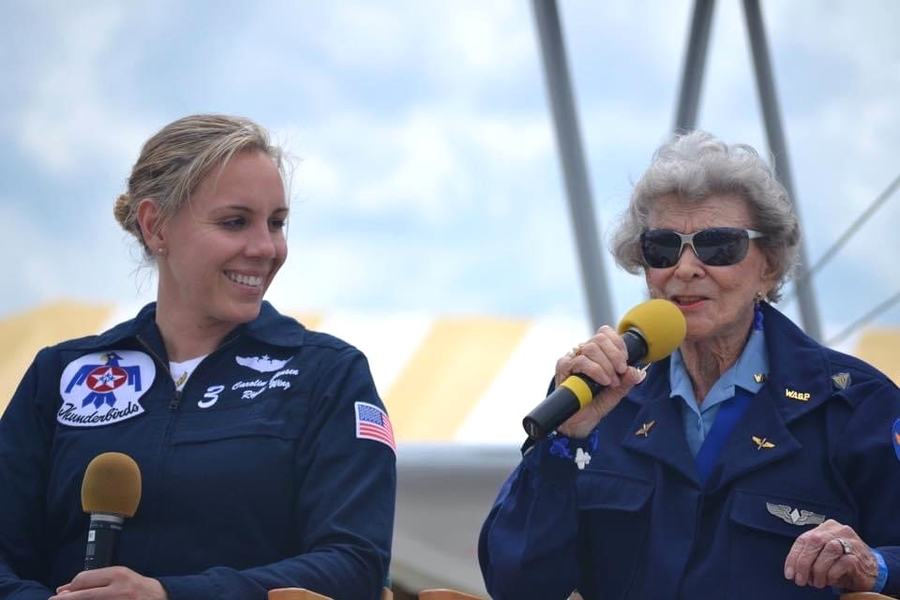
The WASP influence, and the friends she's made, is why Caroline is so honored to now serve as the recently elected board president for the National WWII WASP Museum at Avenger Field in Sweetwater, Texas. One of her favorite memories from her Thunderbirds career is at the 2014 Oshkosh air show, where she socialized with WASP Bee Haydu. Bea had invited Caroline and some of her Thunderbird teammates to the seaplane base the morning before they flew in the air show. She describes the memory with delight, "On this beautiful morning, four Thunderbird pilots went to the seaplane base and spent time with this national treasure and her family and friends. We shared stories, laughed, and even flew from beautiful Lake Winnebago in the seaplanes."
When it was time for Caroline to return to Wittman Regional Airport (KOSH) to prepare for the afternoon air show, she got into the car. Getting ready to pull out, there was a gentle tap on the window, and Caroline looked up to see Bee Haydu standing there looking at her. She motioned through the glass for Caroline to get out of the car. When Caroline got out, Bea led her behind the car, took both of her hands in her own, looked her in the eye, and said, "They really do respect you and view you as their equal."
"It was a moment that meant so much to me to show her how far women had come in the (then) 70 years since she bravely volunteered to serve her country," Caroline recalls.
Another noteworthy influence on her aviation career was her relationship with WASP Nell "Mickey" Bright. At press time, Nell is 102 years old and lives in Salt Lake City. Caroline sees her a couple of times per year. "She always tells me that her favorite aircraft to fly was the B-25 bomber," she says, and adds that flying the B-25 is on her list of goals, along with the other warbird trainer aircraft from World War II. Caroline is currently working toward transitioning her military flight credentials to civilian certificates.
"It is because of women like Mickey and all the WASP that I could serve the way I did in the Air Force," says Caroline, and it's why she chooses to volunteer her time for the National WASP World War II Museum. "There are other women like me who are the legacy of the WASP and know that we owe a debt of gratitude to these pioneering women military aviators," she says.
Blaze's Thunderbird uniforms are now displayed for visitors to see at the WASP Museum and Texas Women's University Archives. However, Caroline derives the greatest pleasure from delving into their archives. One of her favorite objects is the yearbooks that each class put together and published at the WASP museum. "They are a beautiful time capsule that shows the grit and determination of these young women as well as their charismatic spirit and sense of humor," she said.
She also found some astounding coincidences, particularly their debrief notes and actual logbooks. "It is amazing how similar some of the teaching notes they received from their instructors are to the instruction I received from male instructor pilots in my day."
As she reflects on her experiences and most rewarding moments of her life in aviation thus far, she describes things that most pilots only dream of, and she appreciates every single one of them.
"I have been so fortunate to have seen shooting stars through my night vision goggles during combat sorties over Iraq, and hearing the relief of the warfighter's voice on the ground when you check in on frequency.
"Taking off in a four-ship of F-16s on a 150-foot-wide runway, just a few feet from each other with an engine producing 30,000 pounds of thrust and going straight into a loop is something I will never forget. And it became routine!
"Flying a jet that I didn't do a walk around on, read the maintenance forms, or even put my gear in was the ultimate display of trust and professionalism! Working closely with squadron members whose jobs were on the ground and ensuring it was safe for me to fly was one of the best parts."
Heartwarming Memories
In 2014, the Thunderbirds performed the pregame flyover at the Minnesota Twins' Target Stadium for an MLB All-Star game while she was on the team. They set up a holding pattern so that they could be flexible to arrive atop the stadium as the singer finishes "…and the home of the brave."
"We staged out of Duluth for this event because the Thunderbird Commander didn't want to mess with six F-16s going in and out of Minneapolis-St Paul International Airport's Class B airspace," Blaze explained. "We were holding off to the east of the stadium with a long run-in leg to give us time to adjust for the singer's timing. We were holding over a town in Wisconsin, and I looked down at my ForeFlight app to realize the town was New Richmond, where I was born. I remembered being a little girl on our farm there looking up at the sky, wanting to fly. Talk about a full circle moment!"
The cherry on top of her Thunderbird experience was her last air show at the home base at Nellis. While she was off to work, her son, Finn, was walking around the air show with his grandpa. He was wearing a little flight suit and a reporter saw him and thought he would be a good 'man on the street' interview. "The reporter had one big question for Finn, 'What's your favorite part of the air show?'" Blaze said. "My six-year-old replied, 'When my mom flies.' The reporter was unconvinced and thought this was a kid making up stories and asked, 'Oh really, what does your mom fly?'
"Without hesitating Finn pointed his finger directly at the Thunderbird F-16 parked on the ramp and said, 'She flies one of those!' Las Vegas Fox News closed out the nightly report with the feel-good segment from the airshow and that interview. The interview cut to footage of F-16s streaking by and said, 'for the record, she flies one of these.' It was a blessing that Finn was old enough to understand and appreciate how special that assignment was for both of us."
The Blaze Legacy
When we interviewed Caroline for this story, we asked what legacy she aspires to leave in both the aviation community and the broader realm of empowering individuals to achieve their dreams. It was an easy answer. She wants to inspire others to reach their goals.
"My grandparents were dairy farmers in Wisconsin, and when I was born until I was seven years old, I lived on a farm as well," Blaze said, with a smile. "I joke that if a farm girl from Wisconsin can do it, anyone can, and it doesn't matter what kind of background you come from or how much aviation experience you have in your family."
It's a message she aims to share in her first children's book, Thundermouse, which was published in October. It conveys a heartfelt message that deeply resonates. The enchanting tale follows an adventurous mouse, subtly weaving the profound bond between children and parents, even across distances. Inspired by a playful jest with Finn during her Thunderbirds missions, the narrative captures that essence. Beyond the story, Thundermouse appeals to aviation enthusiasts with hidden "Easter eggs," a touching homage to women in military aviation.
Starting from the young girl captivated by the dream of becoming a pilot one day, to the 12-year-old who watched Top Gun and aspired to be Maverick (and essentially became him), Caroline's life journey will serve as inspiration for both men and women, boys and girls, echoing the legacy of the WASP who preceded her. Though initially disconcerted to learn that women were not allowed to fly fighters when that first became her dream, she persevered.
"If you match your dreams with focused determination, anything is possible!" she declares.
No doubt, Caroline's journey exemplifies the power of resilience and determination, a testament to the adage that when dreams are pursued with unwavering dedication, they can break through even the most formidable barriers.