Most aviators can describe exactly what drew them to aviation or what fueled that desire. World War II pilots often talk about making model airplanes of balsa and paper. Richard Bong told of seeing a military courier airplane flying daily over his home enroute to President Coolidge’s summer White House in Superior, Wisconsin. Others tell of family member aviators who shared tales of their aerial adventures.
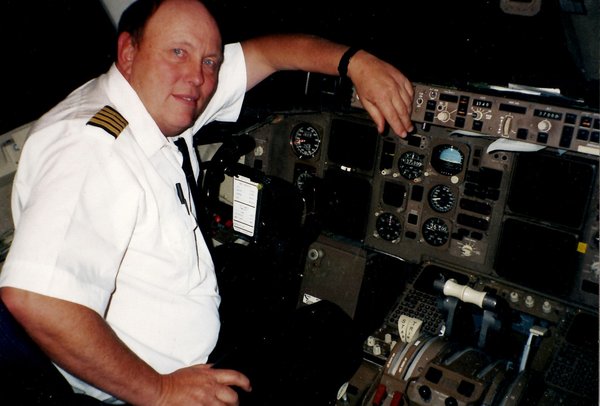
Bob Lussow was drawn to aviation partly due to where he grew up. Edison Park, a small community of about 10,000 people in the early 1950s, is located northeast of what was called Orchard Place/Douglas Field. Today, we know that airport as O’Hare International. In the mid-1950s a young boy living under the traffic pattern for the airport’s runway 4/22 grew enamored by the Illinois Air National Guard’s North American F-86 and Republic F-84 aircraft mixed with a steady stream of general aviation aircraft.
His desire was so deep, his dream so powerful that it drove Bob to write a book titled Flying Airplanes, My Occupation when he was in the fourth grade. He divided his thesis into three sections – recent day airlines, the future of airlines, and airline problems. It was well written considering the author’s age and full of details that reflected a great deal of research. Reading it you come away with only one conclusion – this youngster was going to be a pilot, but just a not just a pilot; he was going to be an airline pilot.
Another influence on the young, would-be aviator, were two cousins who were WWII vets and had purchased a military surplus North American L-17, Navion. They convinced 14-year-old Bob that he could earn “free” flying time by polishing the Navion. It seemed like a great deal in the mind of the youngster who would pedal his bike eight miles to the airport for the opportunity. The lesson an older Bob recalls is that two years of polishing equals less than 10 hours of flight time. Bob’s first “official” flight lesson was on August 15, 1959, in a 65-hp Piper J-3, N78403, at the old Ravenswood Airport, in Rosemont, Illinois. He would solo nine flying hours later in a Piper J-3 – on skis.
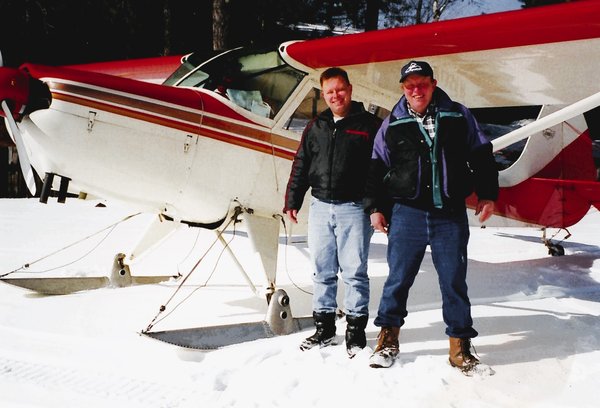
Flight training slowed but other life events continued. Bob graduated from high school in 1961 and then went on to study aeronautical engineering at the University of Tulsa. He would commute home some weekends to visit his girlfriend, Tina (Timi), who, two years later in June of 1963, he married. Bob quit school and returned to flight training. He obtained his flight instructor certificate on December 17, 1964. In addition to providing flight instruction, Bob worked as a line boy, snowplow driver, and cleaned bathrooms at Ace Aviation, at the Schaumburg Regional Airport.
In early 1965 Bob applied for a pilot job with United Air Lines, twice. He was turned down both times during the interview phase. Both interviews provided him with experience and lessons on how to do better. Bob would not be deterred! A contact suggested he apply with Delta Airlines. Evidently the third time was the charm. After riding a Douglas DC-8 from O’Hare to Atlanta, Bob spent the entire day in interviews. Bob says, “It was the longest day of my life.” He flew home and told his wife, Timi, that he thought the interview went well. Maybe so, but 10 days later the young pilot still hadn’t heard from Delta.
On the eleventh day, a Thursday as Bob recalls, Delta called. Bob was flying on a charter flight and Timi took the call. Delta made an offer—and asked a question, “Can Bob be here on Monday morning to begin training?” Timi’s answer was yes! His hire date was October 18, 1965. Imagine, he obtained his CFI with 224 hours of flight time and just 11 months later he was in training as an airline pilot. Interestingly, Bob had scheduled a multi-engine course prior to the Delta interview. He had to cancel that training to begin his airline training.
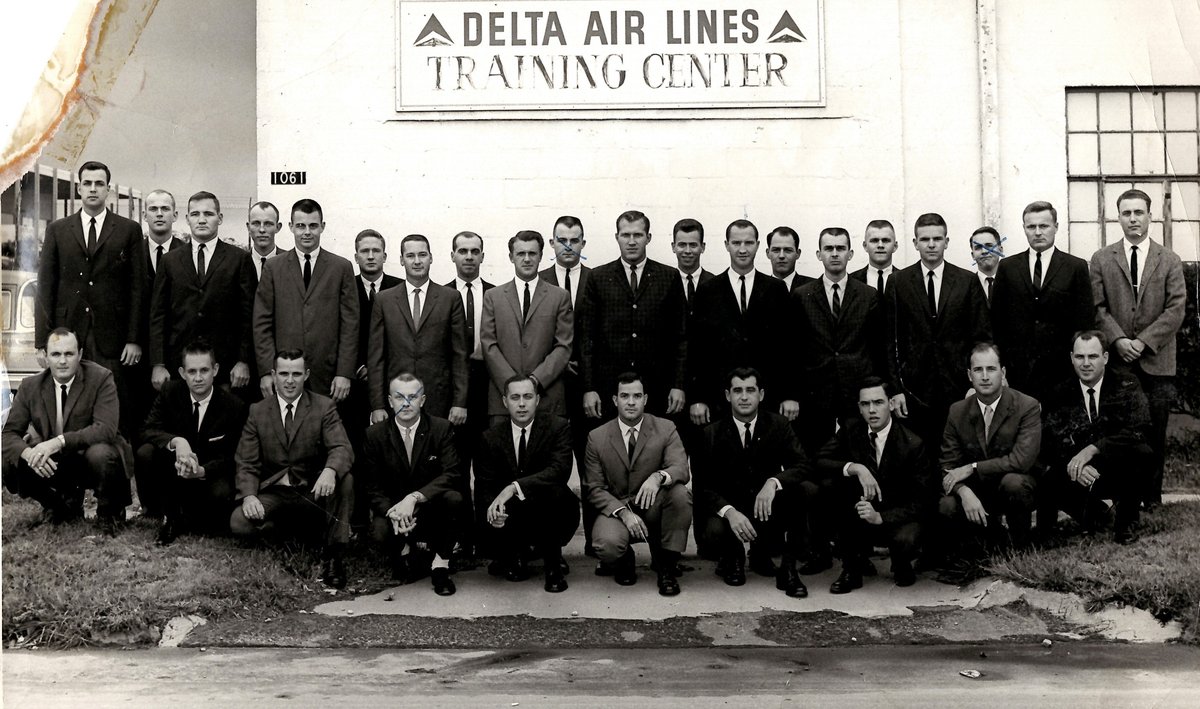
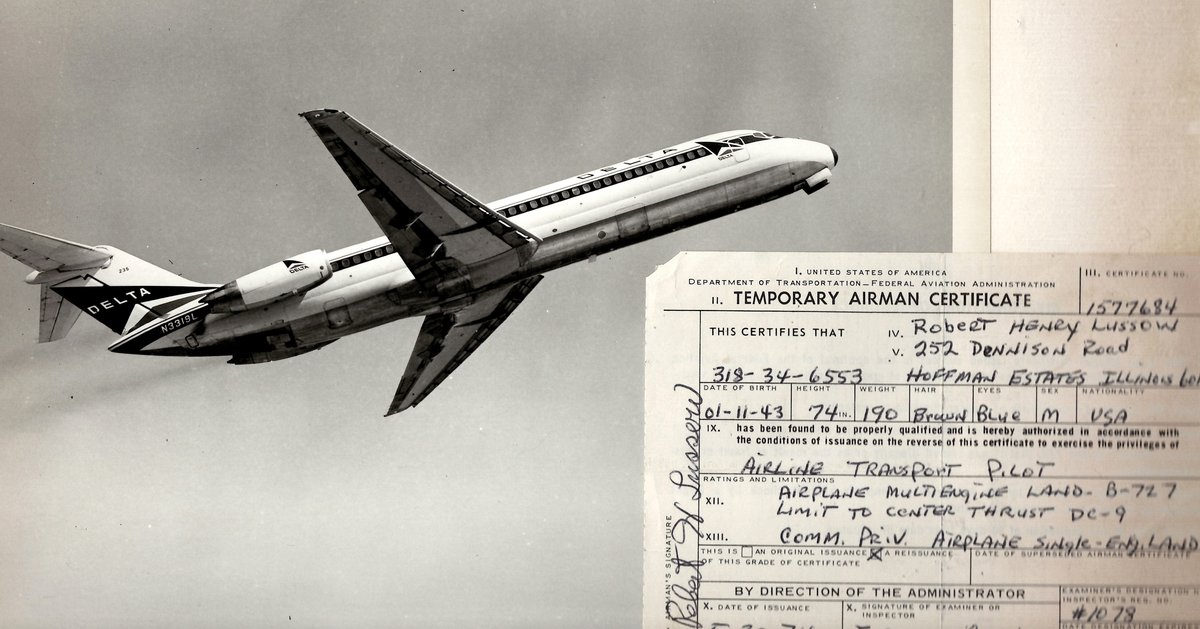
In January 1966 Bob became a flight engineer on the Douglas DC-6 and DC-7 aircraft and was assigned to Delta’s Dallas, Texas, base. He moved the family to Dallas and later that same year moved back to Chicago as a copilot on the Convair 340/440. Six years later, in 1972, Bob checked out as a DC-9 captain and finally got a multi-engine rating, along with an ATP certificate. During this time Bob still flew small, general aviation aircraft.
In 1971 a Delta pilot friend convinced Bob that they should buy property in northern Wisconsin. They did just that – 640 acres and became avid winter sports enthusiasts. They then bought a snowmobile dealership. Several years later Bob and Timi realized they spent so much time in Wisconsin that they should move there. And they did. It is at this point where most people would begin to settle in – a great job, Bob was flying international routes as captain on the Boeing 757, becoming empty nesters, and planning for retirement. Not Bob. In fact, his aviation story was just getting started.
Commuting to work for a pilot is not like driving across town. It may involve a car, bus, or train, then an airline flight, or two, before you even get to your base. A commute from Tomahawk is even more complex. Unless you buy an airplane and fly yourself to work – as a pilot. Bob began his long-range commute first to Chicago in a Cessna 175, then, after transferring to Atlanta, with a Cessna 320 Skynight. He then upgraded to a Cessna 421 Golden Eagle adding pressurization to get above the weather and add some speed. His last commuter ride was a Mitsubishi MU-2F, an even higher altitude and faster ride. Bob retired from Delta Airlines after 31.5 years in 1997. During his Delta Airlines career Bob flew Douglas DC-6, DC-7, Convair 340/440, Boeing 727, Douglas DC-9, Convair 880, Boeing 757, and Boeing 767ER aircraft. His favorites are the Boeing 757, 767ER, and the Convair 880.
So, what does an airline pilot, who lives in Tomahawk, Wisconsin, do when he retires? If you’re Bob Lussow, you realize there is plenty to do at the local airport. You, and other local pilots, form the “Friends of the Tomahawk Airport” organization. The group, which still exists, promotes and completes improvement projects at the airport. Bob started a flight school, Northernskies Unlimited, welcoming his first student in 1998. Eventually the school operated two Cessna 172s, a Cessna 172RG, and an Aeronca 15AC Sedan, which they operated on wheels, skis, and floats. Along the way the flight school became a LaserGrade testing center to administer FAA Knowledge Tests. A Redbird Flight Simulator was added making Northernskies Unlimited the only flight school in northern Wisconsin to provide simulator training. The school also taught ground school courses at Nicolet Technical College. Due to the 2008 financial downturn Bob elected to close the flight school.
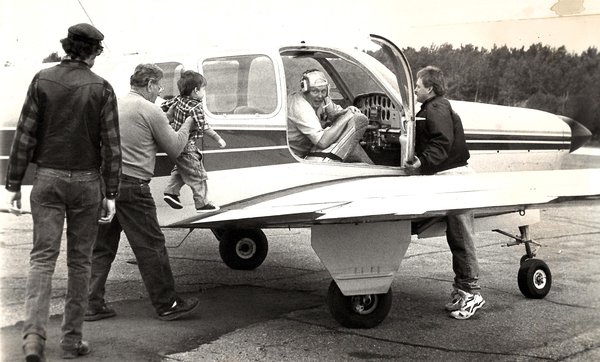
Bob is a total immersion type of guy. Some might say he is “all in.” Based on his experience with the Friends of the Tomahawk Airport group Bob ran for Lincoln County Supervisor in 2000. Elected to the county board he served for 16 years, eight of those years as County Board Chair. Concurrently, Bob was Airport Commission Chair. He feels that every volunteer position he has held provided him with a priceless education.
Bob and his wife Timi moved to Richfield, Wisconsin, to be near their grandchildren in 2016. In 2018 they attended an EAA Chapter meeting in Juneau, Wisconsin, (KUNU) and met Steve Krog. Like 51 years before when Timi took the call from Delta, she told Steve all about Bob, his flying career and how he was an excellent flight instructor. Steve’s reply was simple and to the point, “You’re hired.”
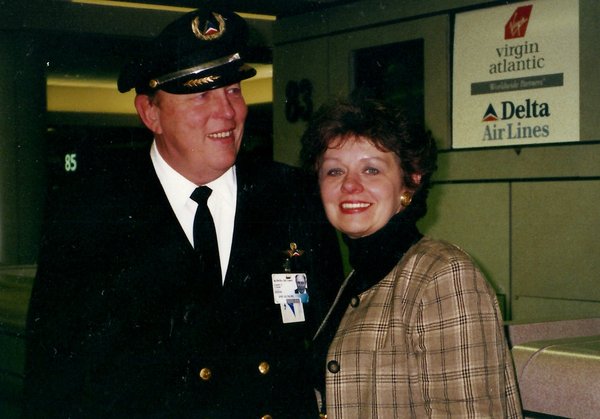
Bob and Timi are the proud parents of three sons and a daughter. One son, Bob, is a Delta Captain and grandson, Kyle, is currently flying for Endeavor Airlines. All told they have 11 grandchildren and two great-grandchildren.
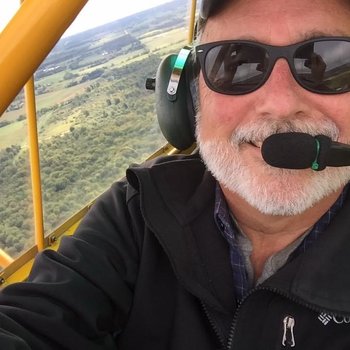
Bob has amassed more than 40,000 flight hours, so far. Today he serves as Chief Flight Instructor at Cub Air Flight located in Hartford, Wisconsin. He has received numerous commendations, awards, and recognitions including the FAA’s Wright Brothers Master Pilot Award and was named a Master CFI by the National Association of Flight Instructors. He was inducted into the Wisconsin Aviation Hall of Fame during the organization’s 38th Annual Induction Ceremony in 2024.