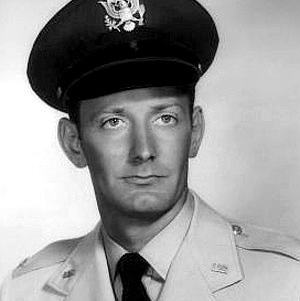
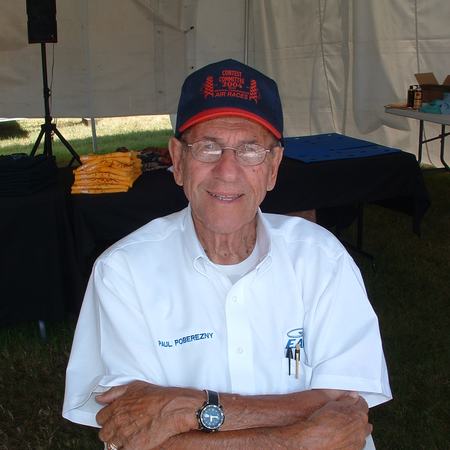
This is a story of what might have been. A story involving Wisconsin’s “Tail-gunner Joe” McCarthy, Charles Lindbergh, President Dwight D. Eisenhower, the Wrigley family of chewing gum fame, and Wisconsin architect Frank Lloyd Wright. This is the story of how Lake Geneva narrowly missed being home to the United States Air Force Academy.
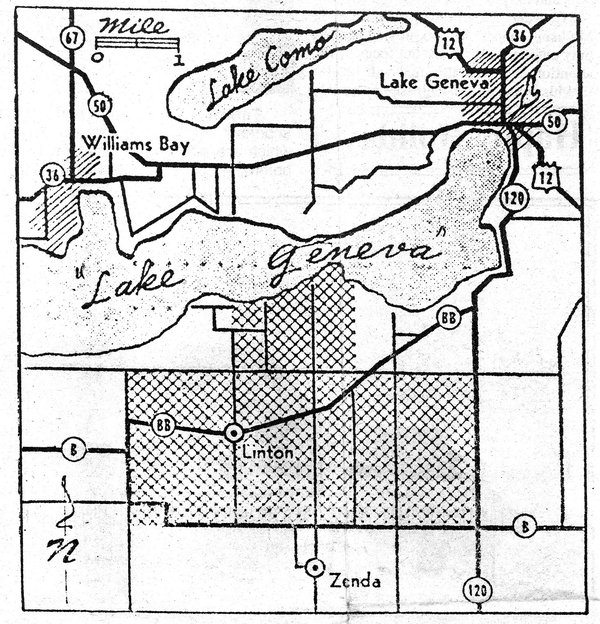
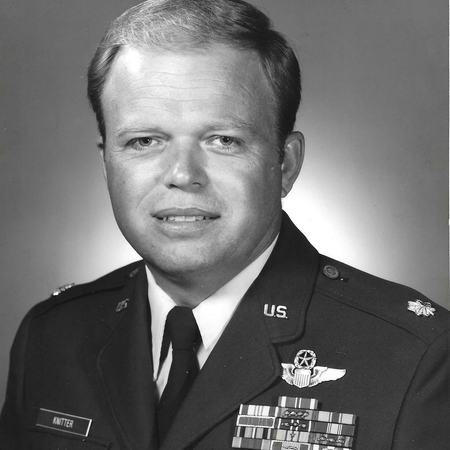
From 1964 until graduating in 1968, I was fortunate to attend the Air Force Academy at Colorado Springs. During those years, memories of the Academy’s site selection and construction were still fresh in the minds of many. Although the Colorado site is spectacular, many cadets at the time didn’t enjoy its remoteness, nor fully appreciate the scenery. It was still common knowledge that the Academy had nearly been built on Geneva Lake, only 75 miles from Chicago, 45 miles from Milwaukee, and perhaps most significantly, near the then nationally acclaimed Playboy Club Resort at Lake Geneva. (Officially, the lake is “Geneva Lake,” while the city at the east end is Lake Geneva.)
In the mid-1960s, the cadets widely held the view that had it not been for a few rich Chicago industrialists who considered Geneva Lake to be their exclusive getaway, and who were fearful of “aircraft noise,” our campus would have shared the same lake as the Playboy Club, instead of being next to a mountain north of Colorado Springs.
Finally, more than 40 years after graduating, I started investigating the widely held rumor that a handful of rich Chicagoans had kept the Air Force from building its Academy on the shores of Geneva Lake.
Need for an Air Force Academy
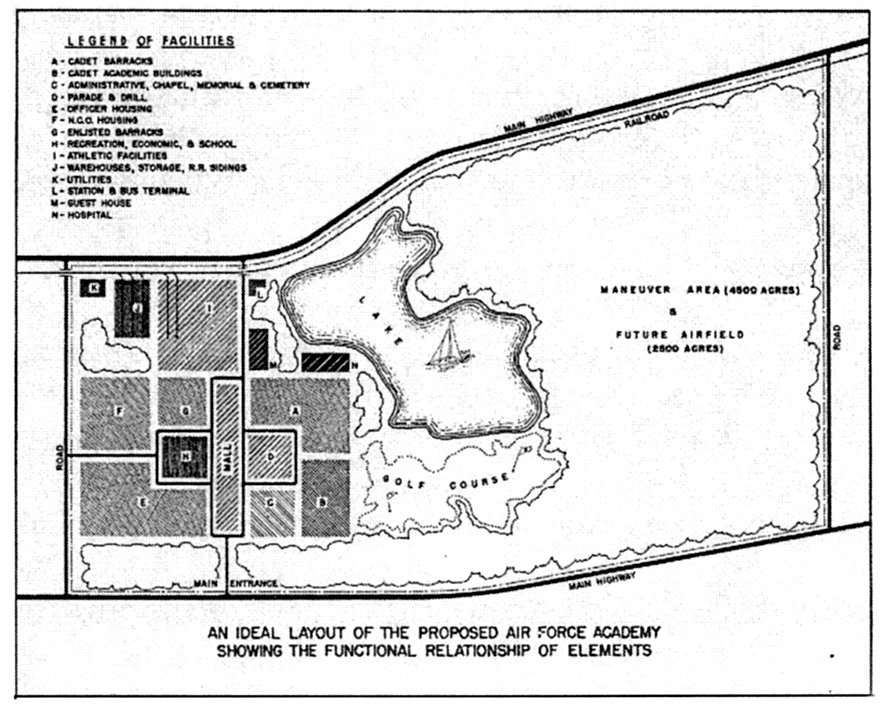
Even before the Air Force gained its independence in 1947, it had been obvious that a professional school to train officers was needed, just as the Army and Navy have West Point and Annapolis. In 1949, Congress started the legislation to authorize an Air Force Academy, but when the Korean War began, progress stalled.
Finally, on 1 April 1954, President Eisenhower signed Public Law 325 authorizing the Air Force Academy, and site selection began in earnest. The Air Force solicited nominations for potential sites, and politicians and chambers of commerce flooded the Air Force with 580 proposed locations in 45 states. Secretary of the Air Force Harold Talbott appointed a selection committee consisting of America’s most famous aviator, Brigadier General Charles Lindbergh; Lieutenant General Hubert Harmon, who had long advocated a separate Air Force Academy; and retired Air Force Chief of Staff General Carl “Tooey” Spaatz. Two highly regarded civilians were on the committee as well: Dr. Virgil Hancher, president of the University of Iowa; and Merrill C. Meigs, a veteran newspaperman, vice-president of the Hearst Corporation, and a famous pilot in his own right for whom Chicago’s Meigs Field was named. The new site selection committee immediately began reviewing the 580 proposals trying to winnow them down to one.
Selection Criteria
The selection committee couldn’t visit 580 sites, so began evaluating each against the following criteria:
- Aesthetics—they realized the site would become a national landmark and should have great natural beauty.
- Cost—land acquisition and construction should be as inexpensive as practical.
- Size—the site should be large enough to train 2,500 cadets and allow room for expansion.
- Near population centers—should be no more than 50 miles from a major city in order to provide entertainment, transportation access, recreation, and religious and cultural opportunities.
- Future airfield—the ability to build a modern airfield on the site.
- Climate—no extreme weather conditions for any season, and preferably a site that would not require air conditioning in the summer.
- Terrain— An adequate supply of water and mild terrain relief to keep construction costs lower.
Using that criteria, they whittled down the 580 sites to those worthy of further consideration, and made ground inspections of 34 sites, while inspecting another 33 sites from the air. (Lake Geneva was the only Wisconsin site at which they made a ground inspection, although they did view the Janesville and Wisconsin Dells proposals from the air.)
After starting with a list of 580 proposed sites in April, by 3 June 1954 they had narrowed the list to three:
- A site on the south shore of Geneva Lake
- The Colorado Springs site
- A site west of Alton, Illinois, on a bluff overlooking the confluence of the Missouri and Mississippi Rivers
Opposition begins
As soon as the Secretary of the Air Force announced the three finalists, organized opposition formed at both Lake Geneva and Alton. In the Alton area, landowners quickly formed opposition groups and deluged their congressional representatives, senators, the Air Force, and President Eisenhower with telegrams and angry phone calls. The resistance centered on a feeling that the Air Force would condemn land without offering adequate compensation and that “we would be deprived of land that was legally ours,” as one group wrote Secretary Talbott.
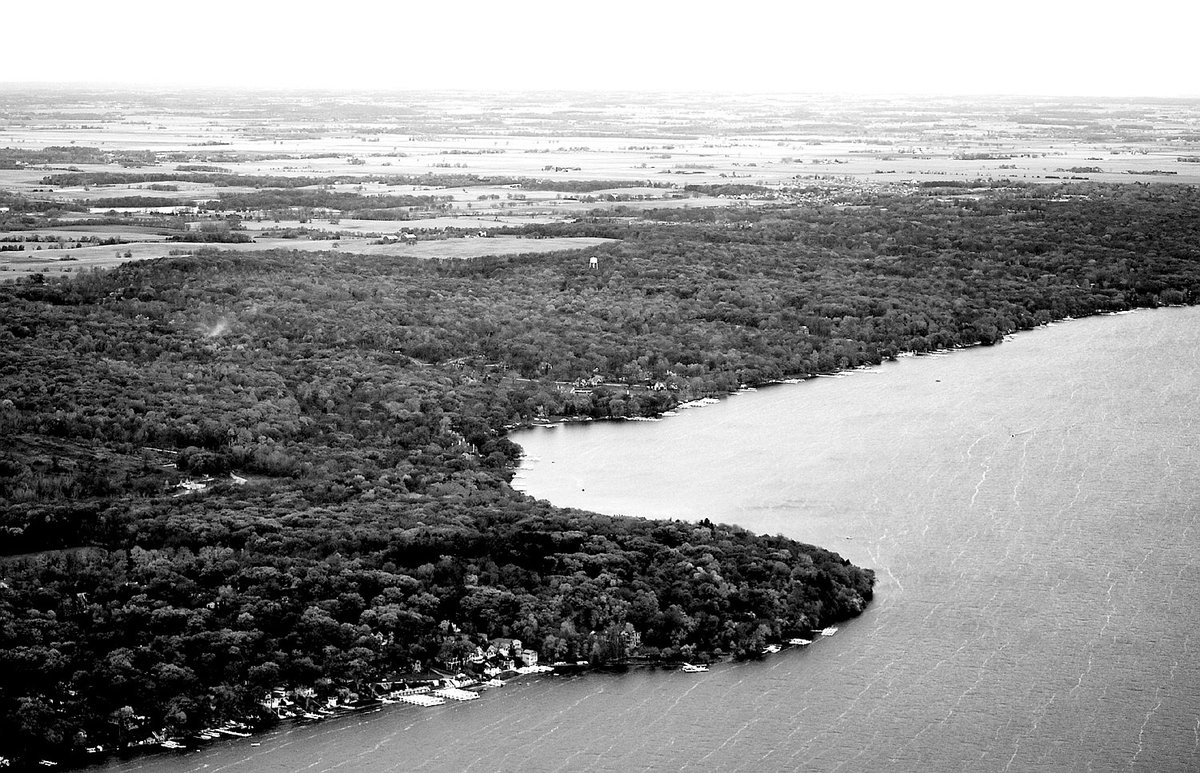
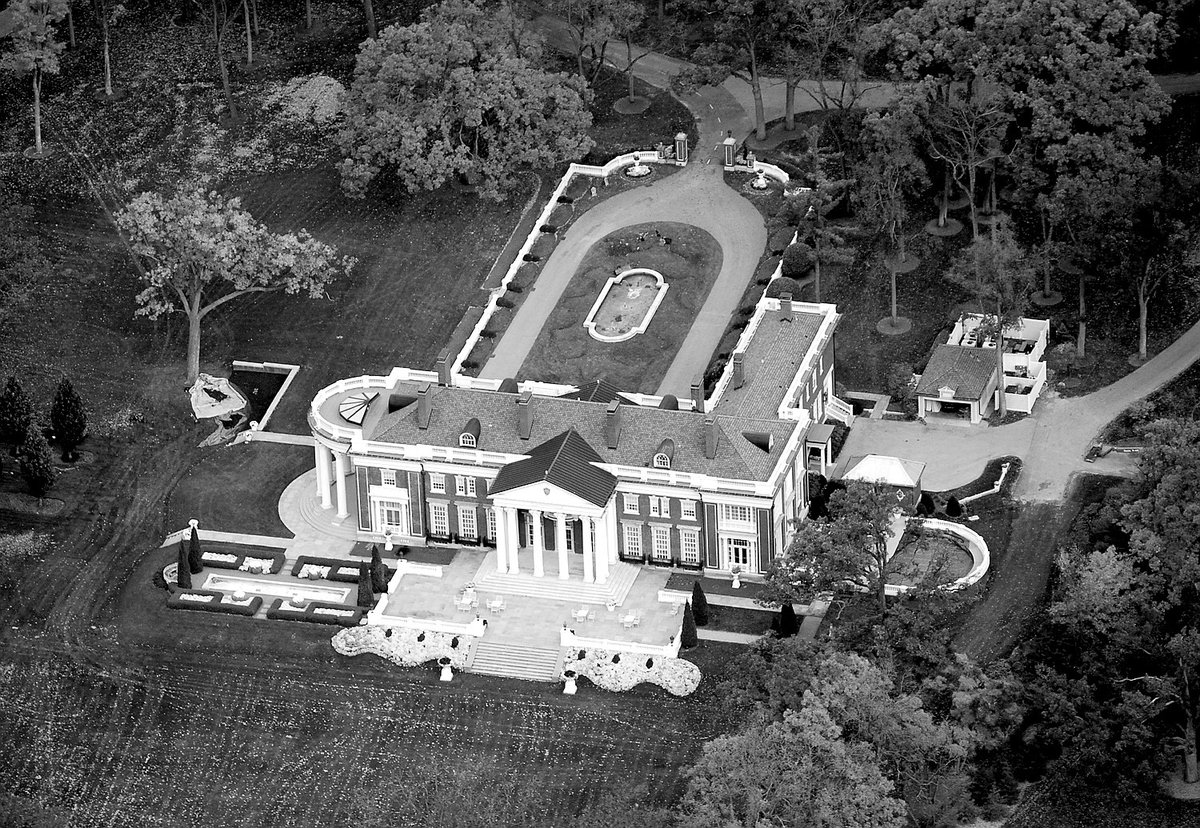
In Lake Geneva, opposition was different. The area prided itself on being called the “Switzerland of America,” and the “Newport of the West” because of the many expensive mansions and summer resorts lining the beautiful lake’s wooded shores. Wealthy families from Chicago and Milwaukee owned many of the expensive homes and used them as weekend and summer retreats to get away from the congestion and heat of the large industrial cities.
While opposition grew in Alton and Lake Geneva, Colorado Springs was ecstatic at being named a finalist, and mounted a sophisticated (for that era) public relations campaign to make sure the city would become the final choice. Among other efforts, brochures, placards, and banners appeared all over town saying, “Colorado Springs welcomes the Air Force Academy.” Colorado Springs stepped in to ensure there would be no resistance over land acquisition.
Opposition in Lake Geneva
Not everyone in Lake Geneva was opposed. The Chamber of Commerce had originally proposed the site south of the lake, and many city and county officials, civic interest groups, and businesspersons realized the positive effect the Air Force Academy could have. Both Wisconsin senators—Alexander Wiley and Joe McCarthy—as well as Governor Walter Kohler strongly supported the site. In fact, many felt President Eisenhower would use the Geneva Lake site as a bargaining chip to get “Tail-gunner Joe” off his back since McCarthy was then making virulent charges of communists hiding within the Eisenhower Administration. (Those people who thought McCarthy’s attacks might benefit Wisconsin were wrong, as we will see later.)
The opposition in Lake Geneva centered in two areas: Those landowners in the Town of Linn who thought the Air Force would take the land from them without adequate or just compensation; and, the owners of the mansions on the north side of Geneva Lake who wanted to preserve the quiet of the lake.
In a letter to Secretary Talbott, one angry homeowner stated, “The responsible people surrounding the lake are very much disturbed over the possibility of seeing this beautiful lake converted into a mere landing strip for a bedlam of roaring airplanes.”
An editorial in the West Bend newspaper said: “If the Air Force Academy were established here…the town instead of being a quiet community would be filled with brass from morning ’til night. And every morning when I get up to go out to the lake, instead of seeing wildlife and woodland creatures, I’d see a second lieutenant.”
In another letter in the Lake Geneva Regional News, one writer claimed, “Lake Geneva would be a prime target for hydrogen and atomic bombs.”
One of the most interesting letters was from Henry Gill of Chicago who wrote a letter to the Lake Geneva Regional News where he listed several adverse effects he imagined the Academy would bring with it. Among those were a loss of property values, despoliation of the area, and an airport to teach the Air Force students the latest in jet propulsion, “thereby creating deafening noises, disturbing the peace and quietude of the whole area, and driving away wildlife and man.” Among his more outrageous claims was a statement that, “The Air Force academy will lower morals and create unsightly trailer camps, slums, and vice areas.”
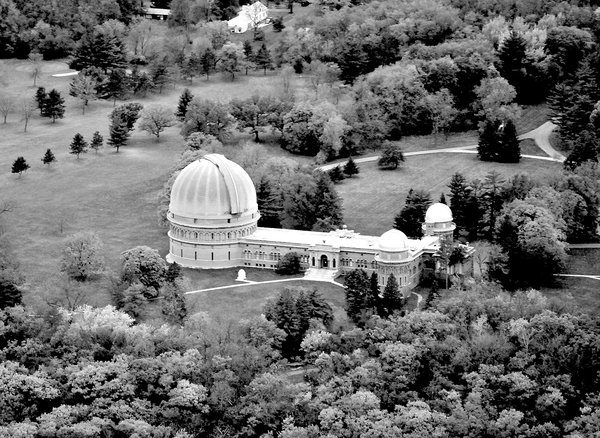
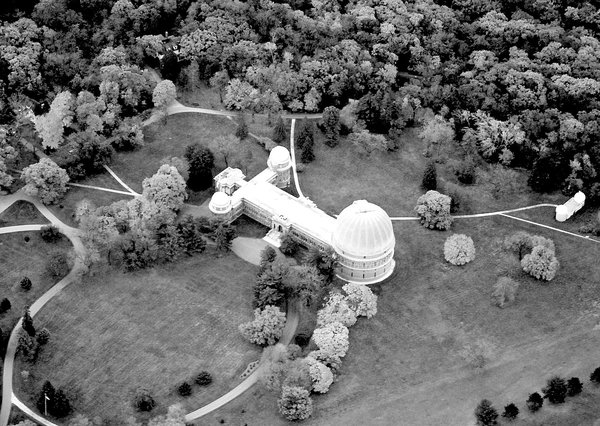
Despite the vocal opposition, a majority in the Lake Geneva area realized the Air Force Academy would be an institution of higher learning ranking with Harvard, Notre Dame, Northwestern, and the University of Chicago, which already owned and operated the famed Yerkes Observatory at the northwest end of the lake. They believed it would not be a noisy jet air base with young “airmen” looking for a place to get drunk on Saturday night.
The Lake Geneva Regional News took the position that the Academy could only benefit the area and in several editorials tried to educate people on its benefits. In one editorial the newspaper stated, “Here is our future. Stability such as this area has never before experienced would replace our present unpredictable and fluctuating economy which is now largely dependent on the tourist trade.” And went on to say, “The Academy, contrary to the mistaken belief of a minority, will be a university of distinction. To falsely label it as an ‘Army Camp’ is as preposterous and misleading as to describe Yerkes Observatory as headquarters for an interplanetary space patrol.”
During a telephone interview, Doug Elliott, a former editor of the Lake Geneva Regional News said that after one editorial, he received a personal phone call from P.K. Wrigley telling him to “knock off the editorials.” (Although as I later learned, that call may have come from someone only pretending to be Wrigley. John Notz of Lake Geneva, who knew P.K. Wrigley, told me it wasn’t Wrigley’s style to be so direct and confrontational.)
Lake Geneva businessperson Arden Peck stated it well, “I consider the Air Academy to be a very high class college. It will maintain high standards and have high-class students. Would we complain if Harvard University were coming here?”
The Final Site Visit
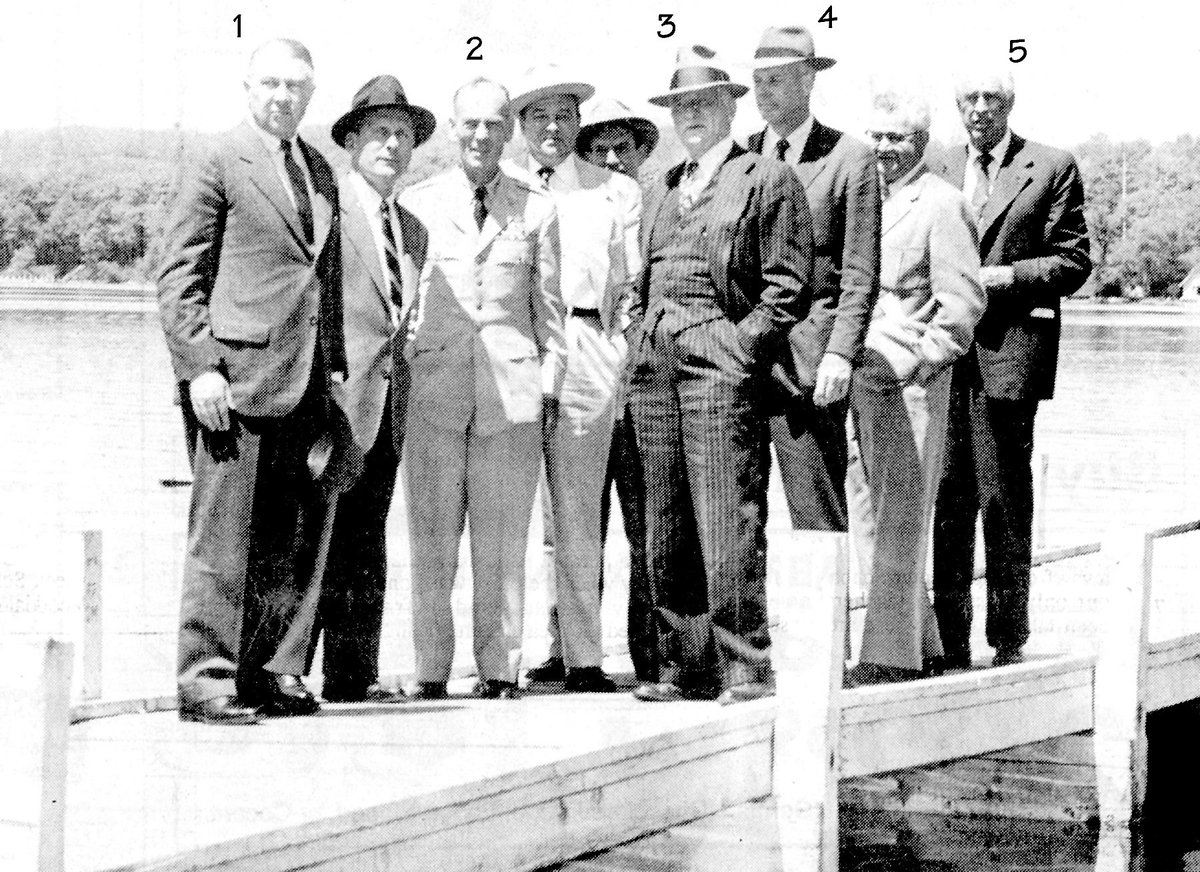
The selection board visited the Lake Geneva area twice, first while narrowing 580 sites down to three, and again before the final selection. The Lake Geneva opposition was out in numbers for the second visit in June and tensions ran high. The selection board landed in Milwaukee where a convoy of cars driven by local supporters picked them up. Wisconsin State Patrol troopers met the procession at East Troy and escorted them to Lake Geneva to avoid stopping for demonstrators. As the board toured the site and then ate lunch in the old Frank Lloyd Wright-designed hotel in downtown Lake Geneva, protestors lined the streets, holding signs expressing sentiments such as, “No Academy Here,” and “Go to Colorado.” They had hung a large banner across a Lake Geneva street saying, “Air Force Go to Colorado.”
The day after the final visit, the Secretary of the Air Force wrote a letter to Governor Kohler saying, “I have been terribly disturbed by the letters and telegrams in opposition to the possible location of the Air Force Academy on the south shore of Lake Geneva. It is possible that this is an organized minority…”
This was after Secretary Talbott had told “General” Whiting of the Lake Geneva Country Club that, “Lake Geneva would make a wonderful place for the academy,” that, “Lake Geneva was one of the most beautiful sites he had seen,” and that “it would cost two to three times as much to build the Academy in Colorado because of the mountainous terrain.” Talbott also cited the advantages of the nearness to Chicago, Milwaukee, and Madison, and of the 82 colleges and universities within a 300-mile radius.
On 19 June 1954 as Secretary Talbott approached his final decision, Town of Linn chairperson Franklyn Walsh and John McColow of the Lake Geneva Civic Association filed a restraining order preventing Talbott from selecting Lake Geneva. Talbott was reportedly “greatly upset” over the legal block, considered it the “lowest type of Chicago political ward trick,” and was concerned it would “delay orderly construction.”
Secretary Talbott Selects Colorado Springs
On 24 June 1954, Secretary Talbott announced the “West Point of the Air” would be in Colorado Springs, with classes starting in 1955 at Lowry Air Force Base in Denver until the permanent campus could be completed.
So what had happened? The final selection of Colorado Springs boils down to these points:
The people of Colorado Springs passionately wanted the Academy, and there was virtually no opposition there. The city had also made that eminently clear to the selection board and to Secretary Talbott.
There was a pervasive feeling within the Air Force that Colorado Springs should host the Academy. During World War II, many Air Force pilots and officers had passed through Colorado Springs for training and had fallen in love with the weather and scenery. An informal poll of Air Force officers found an overwhelming majority favored Colorado Springs.
The organized opposition in Alton and Lake Geneva made it easy for Talbott to choose Colorado Springs where he knew the Air Force was truly wanted.
President Eisenhower had favored Colorado from the beginning, although he didn’t express his feelings publicly. His wife Mamie was from Denver and during his terms as President, Ike used Lowry Air Force Base for his summer White House. In 1959 when he received an honorary diploma from the first graduating class, Ike told the Cadet Wing, “I was on the board as a matter of fact, when they decided that there should be an Air Academy and behind the scenes and clandestinely and not saying much about it, I was very anxious that the Academy be in the state I love so much.” Then in 1961 when the former president visited the Academy for the dedication of the golf course named in his honor, he again told those at the ceremony that he had always favored Colorado Springs.
And what about the “in” some Wisconsin politicians thought they had because Ike would offer the Academy to Wisconsin as a bargaining chip to get “Tail-gunner Joe” to shut up? It turned out that both Ike and Talbott detested Joe McCarthy, and that there was never a chance they would ever award a “plum” such as the Academy to Wisconsin while McCarthy was a senator. In fact, I found a document saying that Talbott’s wife (who also detested McCarthy) threatened to divorce Talbott if he gave the Academy to Wisconsin.
Water and elevation
Despite the fact that Colorado Springs was almost a “lock” from the beginning, there were two possible deal breakers. The first was a concern about the millions of gallons of water per day the Academy would need. The City of Colorado Springs solved that by buying rights to bring water from the Western Slope of Colorado to the Front Range. However, water has always been a critical issue along the Front Range, and as the population of the Colorado Springs area mushroomed from about 50,000 in 1954, to more than 600,000 people today, potential water shortages are reaching crisis proportions.
The other potential “deal breaker” was the Academy’s elevation of more than 7,000 feet above sea level. During the 1950s, the Civil Aeronautics Authority (today’s FAA) wouldn’t certify basic flight training at airports with elevations of more than 3,000 feet. Air Force policy was also not to locate primary flying training bases at elevations of more than 3,000 feet. Many expressed deep concern that the Colorado site was simply too high for the basic flight training cadets would receive.
Charles Lindbergh resolved that issue. On 28 May 1954, Lindbergh, Hancher, and Meigs made a secret visit to Colorado Springs to rent an airplane and fly over the site. Located on what is now the Academy was a small private airport that had a small assortment of old airplanes to rent. Lindbergh went into the airport office and asked if he could rent an airplane. The airport manager didn’t recognize Lindbergh and asked, “Do you know how to fly?” Lindbergh quietly answered, “I think I can fly.” The manager then asked, “Do you have a license?” Lindbergh now realized the airport manager didn’t know who he was. Lindbergh answered, “Yes, I have a license.”
“Well,” said the manager, “I have to see your license.” Upon this challenge, Lindbergh pulled out his billfold, started pulling out a dozen flying certificates from countries all over the world, and laid them on the manager’s desk. The manager turned red with embarrassment at not recognizing the world’s most famous aviator. He rented Lindbergh a small Stinson.
To see the potential site and to test the flying conditions, Lindbergh took Hancher and Meigs for a flight. After landing, Lindbergh simply said, “It will do.” It wasn’t until months later that Dr. Hancher reported they had almost crashed the overloaded airplane when Lindbergh got caught in a downdraft and had just barely cleared a ridgeline.
USAFA and Frank Lloyd Wright
Besides almost being in Lake Geneva, the Academy was also nearly designed by Frank Lloyd Wright. After Lindbergh’s work on the site selection committee was done, Wright cabled his friend saying, “Your eye for a site is as good as your eye for flight.” Wright’s Taliesin workshop then drew a proposed design, forwarded it to Washington, and in 1955 it became one of the two finalists in the design competition.
However, Secretary Talbott became concerned over what he called Wright’s “communist” leanings, and about an American Legion threat to make an issue of Wright’s declared opposition to using American military force. Wright didn’t help his case when he refused to go to Washington to sell his design saying, “I assume that an architect shouldn’t be asked to plead his case or tell who he is. The world knows what I can do in architecture. If officials of the Air Force have missed this, I can do more than feel sorry for what both have lost.” Piqued, Wright then withdrew his design from the final competition.
Was Colorado Springs the Right Choice?
After going to school there and over the years coming to fully appreciate the spectacular beauty of the site, I must give an unqualified, “Yes.” But, I also can’t help wondering what it would have meant for Wisconsin had the Air Force Academy been located on the south shore of Geneva Lake.
Author's Notes
Special thanks to USAF Academy Command Historian Dr. Betsey Muenger who allowed access to the Academy library’s special historical collections in October 2008, and to Cadet Kevin LaCosse, with whom I exchanged information while he was working on a history research project of how Lake Geneva missed having the Academy. Kevin is a native of Fontana-on-Geneva Lake, and will graduate in 2011.
Also special thanks to the several longtime residents of Lake Geneva who responded to a letter I sent to the Lake Geneva Regional News asking for information and anecdotes from those who remembered the site selection visits in 1954. I have done my best to report your stories faithfully.