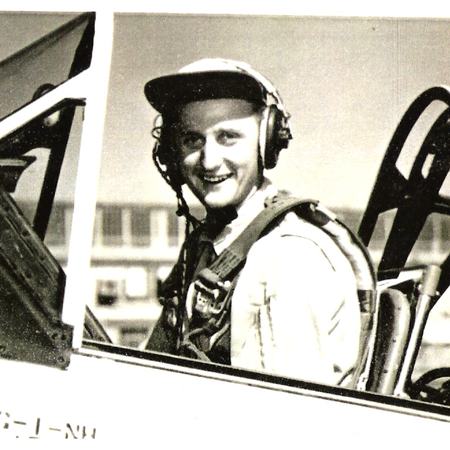
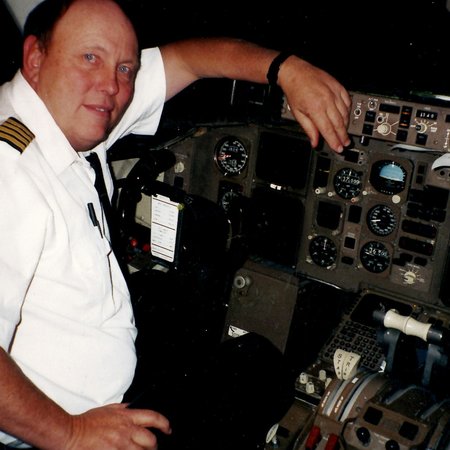
Editor's Note:
A pilot and flight instructor, Bill Lotzer was a successful aviation businessperson and a national leader in developing general aviation in the years after World War II. Lotzer was born in Fond du Lac in 1917, inducted into the Wisconsin Aviation Hall of Fame in 1991, and died in 2003. WAHF founder Carl Guell interviewed Lotzer in the late 1980s. This version of the interview was edited by Michael Goc.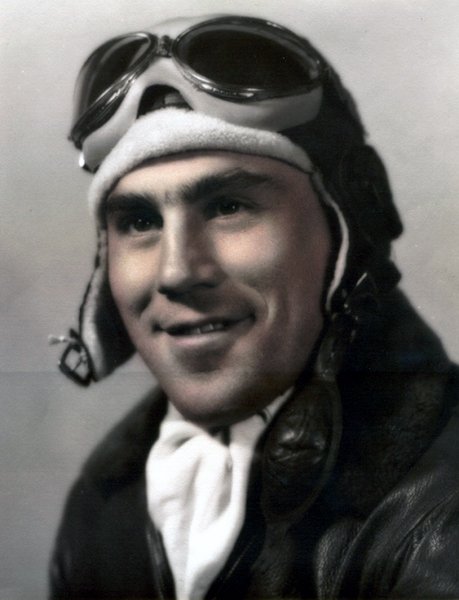
Guell: How did you happen to get into aviation?
Lotzer: I was at Marquette University in law school and Marquette had a CPT program and I entered a program for a private pilot license. My first airplane ride was my first lesson. It was in a T craft and that was an orientation flight. The following week we started in J-3 Cubs right at Curtiss-Wright Airport. The war was getting pretty heated and draft boards were interested and I thought I best get into a good program and I did. Went into the full flight program and took secondary training at Curtiss Wright…aerobatic courses in WACO UPFs. That was a big plane, a real thrilling thing to do.
I graduated from the secondary class. [WAHF Inductees] Bob Huggins and Dean Crites were my flight instructors. Through them I went into cross country and instrument flying and instructor course flying.
We trained naval cadets in J-3 Cubs and again in N3Ns. It was a Navy ship, that biplane. I don’t know how many people remember it but it was a rugged airplane.
Guell: The Navy version of the Stearman biplane, or PT-13, and PT-17.
Lotzer: It was a good airplane and you couldn’t tear the wings off of it. Some of us tried. It seemed impervious to accident or falling apart. We conducted a program for about two years at Curtiss Wright and then the program ended.
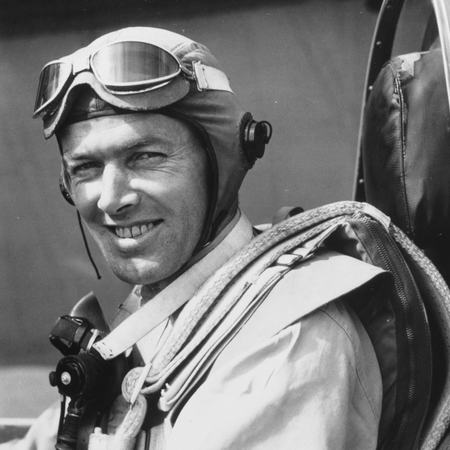
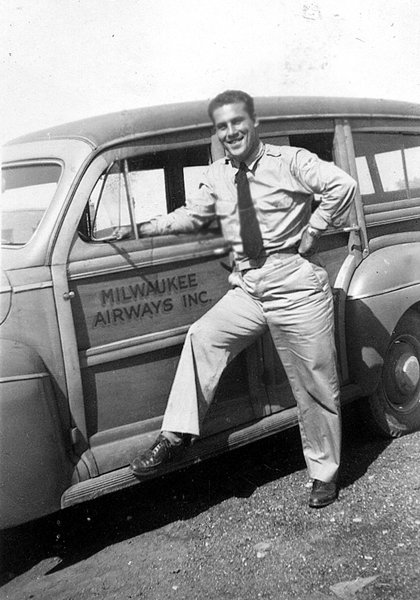
I was in the Naval Reserves and waiting for a call to active duty which finally occurred in 1944. My first assignment was to Dallas, primary flight training. Graduated from that and went to Flight Instructor School at New Orleans Naval Air Station…went to Memphis, Tennessee, and spent about a year there when the war ended.
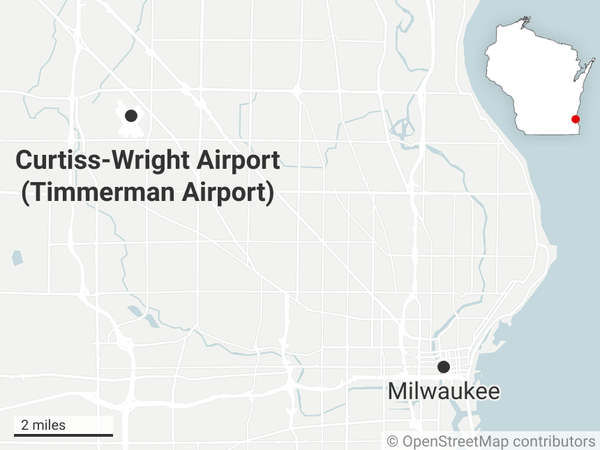
Went back to civilian life…back to Milwaukee with my family, I was then married and had a child, my daughter. Started to go to Marquette University to matriculate in law school and on the way stopped at Curtiss-Wright Airport and saw [FBO] Merle Zuehlke. I was working my way through school on the GI Bill but I needed some grocery money.
Merle said, “Sure Bill, I’ll give you a job as a flight instructor, but why don’t you take over the business?” He gave me a good sales talk and said I should have somebody to go in business with. He said, “I know another young man, you remember him, Monte Obrecht.” I said, “Fine, you get a hold of Monte and see if he’s interested.”
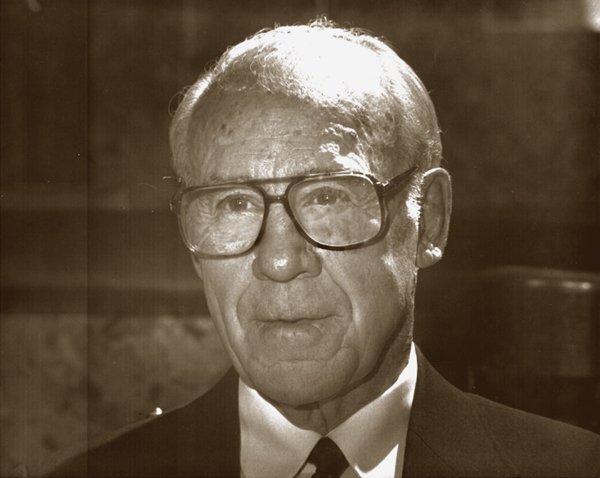
Guell: That was the beginning of Gran-Aire?
Lotzer: That is right. Monte was more interested in bookwork than I was. I was more interested in promotional work and students. By this time the GI program had come into being and I worked with people at the Veteran’s Administration. They needed some help in starting the program and I sat with them quite a bit, worked our curriculum and how to conduct programs. We had a little bit of a head start because of that.
Guell: Yours was one of the first schools approved for Veterans training in Wisconsin.
Lotzer: That’s correct, yes.
Guell: What kind of airplanes did you start with?
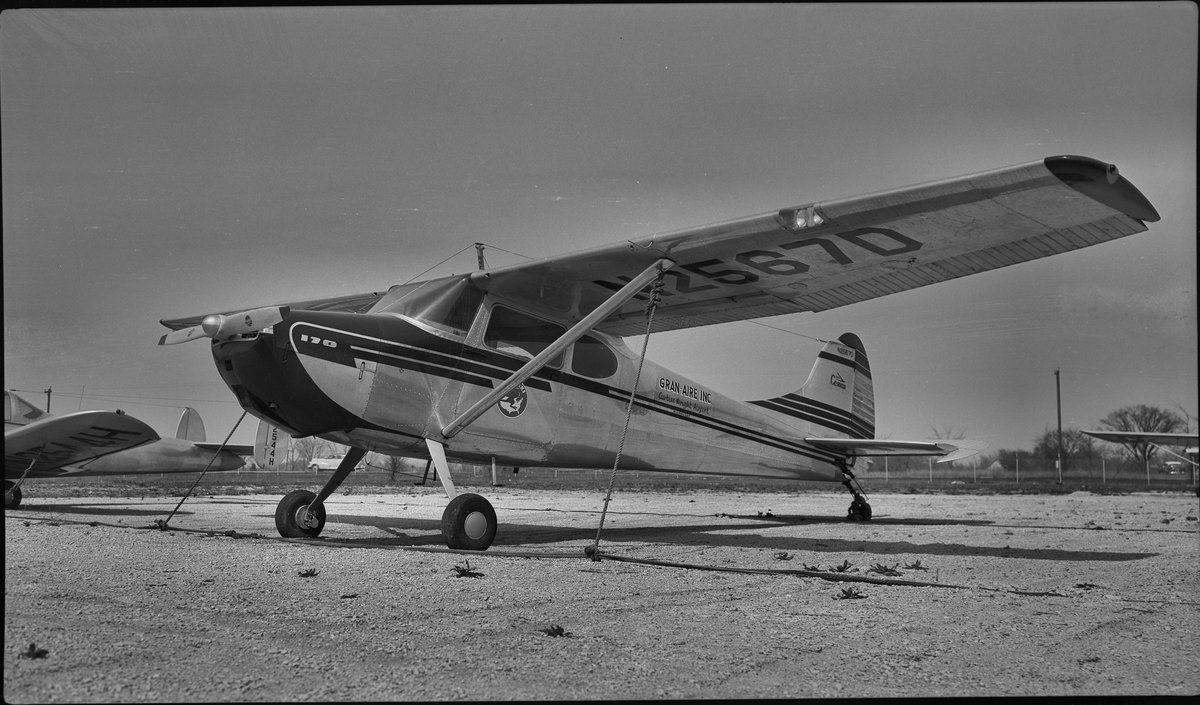
Lotzer: We leased three J-3 Cubs and went right up to five or six pretty fast. In a year we had about ten of them and just about that time when Cessna was coming through with their program of two place airplanes, Cessna 120s, 140s. When the 170 came along we used that as our heavy aircraft for training and at one time we had 239 students.
That is when Milwaukee County and Merle got together and [even though Merle still had a contract with us] he undersold us, sold the whole thing to Milwaukee County at a good price. The field was closed for expansion and improvement. Monte and I had to make a fast move. We moved out to Capitol Drive Airport and literally graded runways in order to have an adequate place that would meet CAA’s approval.
We took at least 239 students out there and we had about sixteen airplanes—ten or eleven J-3 Cubs. We had a barn across Highway 190 and every night we wanted to keep our planes under cover. We rolled them across the highway and up the barn ramp, put them in the barn and set them on their nose. Eight-ten airplanes with the tails way up in the air, with the nose down here. There were a few tailor made stands that you could get, but we were a little careful about our spending money. We had about three or four of those, but for the most part we set them down on a gunny sack full of grain, so the prop would set in there, kind of bury it in there. Set up on the tail.
Our twin engine airplane, we had a twin Cessna T-50. We used SeaBees for seaplane training. Fairchild PT-19s and PT-23s for our secondary aircraft for the commercial, aerobatic course.
After about two years of this, the Curtiss-Wright Airport was completed. [We moved back and got the FBO contract in 1951.]
Guell: Did it become Timmerman then?
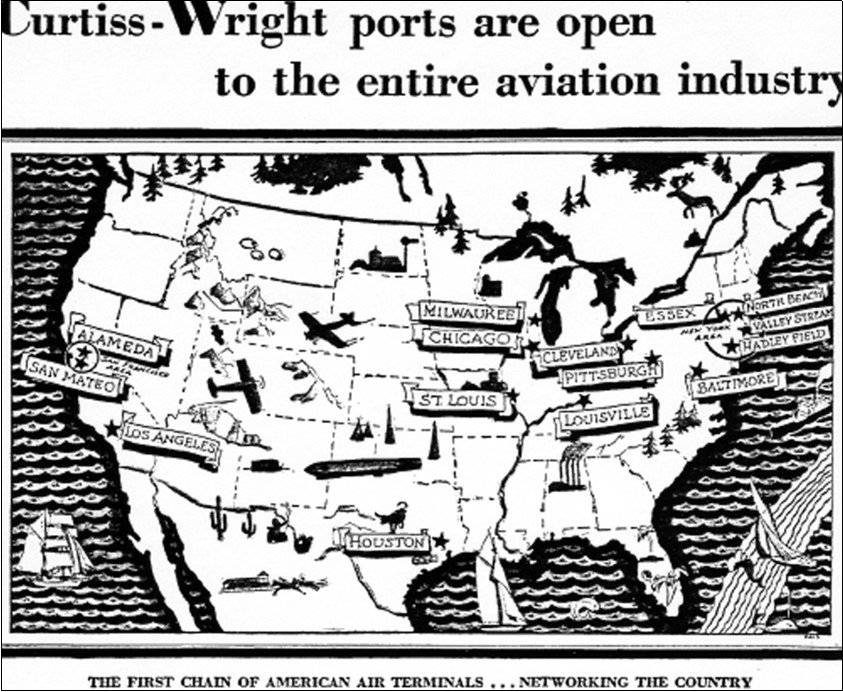
Lotzer: It was still Curtiss Wright and that was a powerful name. I wish that it was still named Curtiss Wright. There were eleven Curtiss Wright Airports in the county. All of them had to give up their names, but Milwaukee was designated as one that didn’t. We could have kept the name but we honored a very good political man, Lawrence Timmerman, who worked very hard. He bulldozed the program for the airport in Milwaukee. We couldn’t say too much about that but we lost a powerful name in aviation when it became Lawrence J. Timmerman Airport.
Guell: How many years were you manager?
Lotzer: From 1950-51 for twenty-three years was my stint. Then by mutual agreement Milwaukee County took over full operation of the airport. I think it was 1978.
Guell: What other public capacities have you served?
Lotzer: That was one thing I felt was important. Aviation being as young as it was it had to be promoted and pushed. Curtiss Wright was a new airport and I wanted it to become known nationally. I became very interested in the Wisconsin Aviation Trades Association. In 1948, we joined and I was elected president.
Our air taxi program was starting. The National Air Taxi Conference was part of the National Aviation Trades Association and we became very active nationally. [Later] we formed the National Aviation Maintenance Council. I was president of that. Then I became president of the National Air Taxi Conference and traveled the country. Then I was honored by being elected president of the National Aviation Trades Association. So for a five year stretch I had offices in Washington, D.C. I represented NATA when the federal government went from the CAA to the FAA.
Guell: Did you join any Veteran’s organizations at Curtiss Wright?
Lotzer: We had a very successful Veterans organization. We organized the very first Flying Amvets Post in the nation. We had about 230 members. Had our own plane. We organized breakfast flights and one of the things that we did which has some history that’s important to the state of Wisconsin, the Amvets had air pageants, air shows every year for three years.
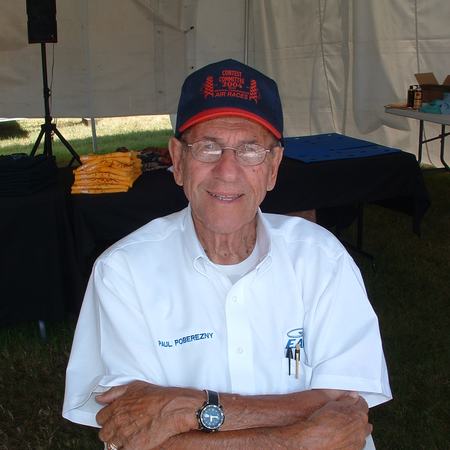
In about 1953 or 1954 after two years of running the air show we became closer to a new movement that was taking place due to Paul Poberezny’s dream for an aviation organization. He was based out at Curtiss Wright Airport and he and I got together and talked about it and I asked him to participate in the last air pageant which was 1953, I think. He did and out of that came what we have for the EAA show today. The air pageants were the forerunner of the present air show which is of course much bigger. We’re proud of that little bit of a touch that we had with the big event in the world.
Guell: Did you have an idol, a person you looked up to, admired, inspired you to get into aviation?
Lotzer: No, I can’t say that. I’ve loved aviation. I like it to this day. It was a practical thing for me. It was a business factor after the war. I thought with my war experience I had a good start for a program that was going to get bigger. When I chose to go into aviation in the military I really choose to be in the flight instruction portion because I enjoyed teaching and you hear about flight instructors getting burned out. It never happened to me. Sometimes I go t pretty tired flying eight hours a day seven days a week, but I always enjoyed teaching flying. I taught women. I taught men. Probably 200 people…from scratch. I’ve given a lot of additional ratings, a lot of instruction for multi-engine ratings, instrument flying, seaplane flying.
I’ve enjoyed every bit of it. There’s nothing that can beat going out in the float plane and dropping in the small lakes we have in Wisconsin and enjoying the scenery and taxing up to a cottage and talking to the people and even giving them an airplane ride. But teaching was fun for me.