Editor's Note:
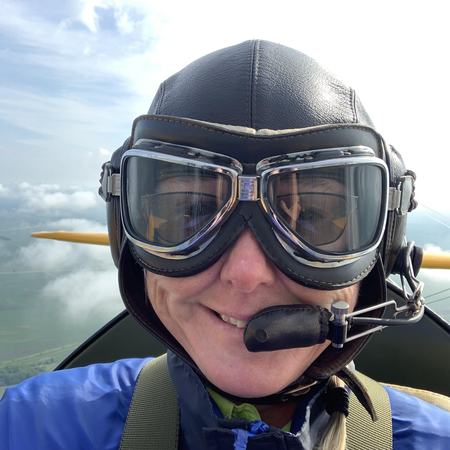
In October 1985, WAHF Founder Carl Guell traveled to Minocqua to interview Gilbert “Gib” Green. The transcript of the interview, along with a scrapbook and photos, Gib’s World War II leather aviator cap and goggles, and an interesting file containing the correspondence related to the actions that brought about an abrupt end to Gib’s piloting days, are in our archives. They tell the story of one man’s life as a Wisconsin aviator in the 1930s and ’40s.Here is an edited version of the interview.
Carl began by asking Gib, “How did you get started in flying.”
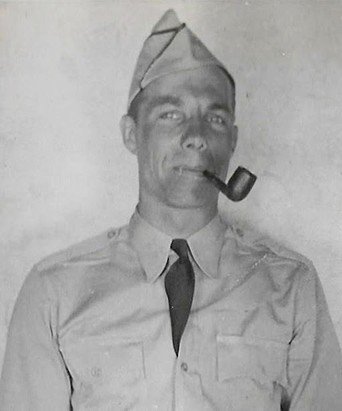
Gib replied: “I first started flying with Archie Towle in Wausau. The first airplane ride I had was in 1928 in a Ford Tri-Motor. I was a senior in high school at the time. Then I started hanging around the airport with Archie.”
He got some training from Towle, but Gib didn’t get any of his first three ratings—private, commercial, instructor—until 1938, after he had moved to Faribault, Minnesota. Self-employed, he became active in the Wausau Chamber of Commerce at a time when business leaders were working to revive the local airport, which had all but died in the early 1930s. Their efforts culminated in the city’s purchase of the airport in 1936 and the hiring of Archie Towle as manager.
Towle had already been running the airport as an employee of its corporate owners, led by paper mill executives Ben and Judd Alexander. He was convinced that promoting events leading to positive publicity were essential in order to revive the Wausau Airport and aviation in general. Wausau hosted air tours, open houses, the American Legion membership round-up, and the VFW’s fly-in encampment. It was the rendezvous point for aircraft from all over north central Wisconsin delivering mail in observance of the 20th anniversary of air mail in 1938. A squadron of speakers, government officials, air line bosses, famous aviators, visited and orated.
The most renowned visitor was Amelia Earhart, who was in town to speak at the Central Wisconsin Teachers Convention in 1936. Earhart spoke about her aviation exploits, of course, but she also talked about her personal interest in improving education for women. As a Chamber of Commerce officer who owned his own car, Gib Green was her designated driver around town.
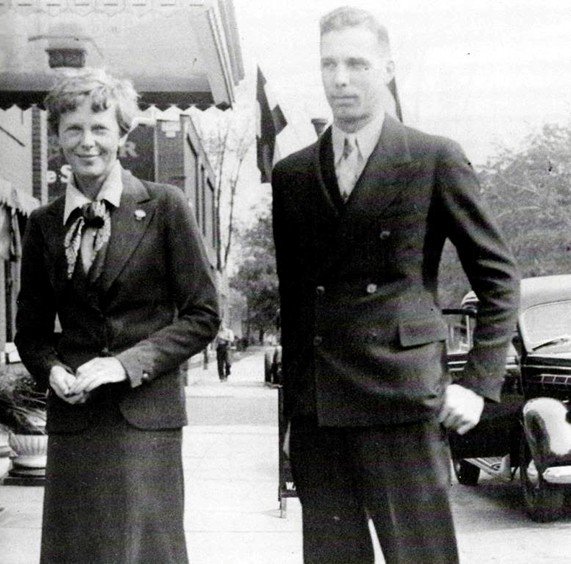
The locals could not let Amelia Earhart visit without getting her into an airplane. Archie Towle took her up in his WACO cabin plane, along with the head of the Chamber, and a Wausau pastor. It was a four-place airplane but, as Gib recalled, he was onboard too.
He remembered Earhart as “a very interesting person to talk with, very casual, not considering herself any different than anyone else. She was just another person.”
Gib talked about Earhart but he didn’t tell Carl why he moved to Faribault, Minnesota, to complete his pilot’s training, only that he had a plan for the future.
“Before the war was declared I had a hunch that we were going to get into hostilities, so that’s when I went for my commercial and for my instructor’s with the idea that I would instruct cadets. That was in 1939.
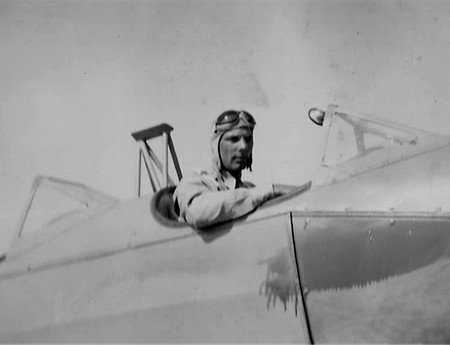
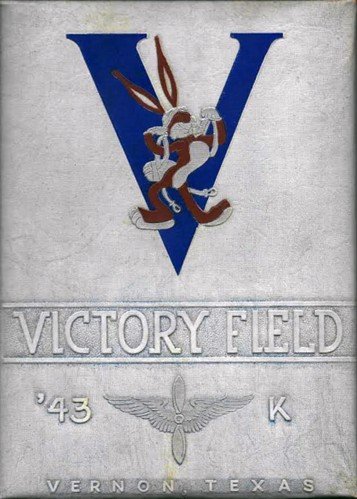
“So right after war was declared [December, 1941] I went with Richie Flying Service in Vernon, Texas, as an instructor. I instructed for about three years before I finally asked for admittance into the service.”
Gib used a Fairchild PT-19 to instruct four or five cadets to fly in nine weeks. Then off they went into the Air Corps. So if he had five nine-week sessions a year for three years, each with five students, he trained 25 pilots a year or about 75 total.
“Then you left there and you went into what we call the Ferry Command?” Carl asked.
“Right, I resigned down at Vernon and went up to Romulus, Michigan, and I was a civilian pilot while I was taking officers training. Then I was given a Flight Officers Commission. About three or four months after I got my commission I went over to the southwest Pacific.”
“Before that you were ferrying planes around the United States?”
“Right before that I ferried all different kinds of planes around the United States. Single engine, multi-engine and all over,” he answered.
“Some of us wonder how those planes ever arrived. You really didn’t have much check out, did you?” Guell asked.
“Really didn’t. You had a kind of casual cockpit check out and then you took off. You were expected to deliver the plane.”
“And where did you go overseas?
“I went from San Francisco to Brisbane, Australia. I flew the plane, a DC-3 from San Francisco to Brisbane via Hawaii, Christmas Island, Tarawa, Solomon Islands, and Brisbane.”
“This was when, 1944?”
“In July of 1944.”
“When you arrived at Brisbane, what happened,” Guell asked.
“We started immediately to fly up in New Guinea with supplies. I flew 1,250 hours in 10 months time so you know we were on the go constantly. [One of the Army units Gib was supplying was the 32nd Red Arrow Division, whose roster was filled with soldiers from Wisconsin.]
“After three months in Brisbane I was transferred to the Island of Biak. Spent about two months on Biak and then we were transferred to Hollandia and spent the rest of my tour.”
Among the items Gib donated to WAHF is a pair of maps, each one identified as an “AAF Cloth Chart.” Printed on finely woven, lightweight cloth, they depict the north coast of Borneo, the Philippine Islands of Mindanao and Luzon, plus the coast of China up to and including “Formosa” (Taiwan). Wind and ocean currents are also marked on the map, just in case.
Carl then asked about civilian pilots in the Air Corps, “that were already trained pilots....you were granted a special kind of wings. What were they called?”
“They were called service pilot wings. It had a S in the center.”
“Now most of your flying was in cargo planes? Did you fly any other kind of planes?”
“All of our assignments were in cargo planes. Then besides that I flew a B-17 and a B-25 we used as our ‘fat cat’ to go to Australia to pick up eggs, carrots, and stuff like that. And our liquor. That was our ‘fat cat.’ Then we had a PBY assigned to the base for search and rescue, and each crew took turns flying that,” Gib answered.
“Did you like flying the PBY?”
“I enjoyed it, believe it or not. I never landed at sea with it, always back at base. But oddly enough the day after I flew a rescue mission the crew that took it out was lost at sea and never returned. We never did know what happened to it.”
“When were you discharged from the service?”
“About three months after the war was over?”
“Where did you go from there?”
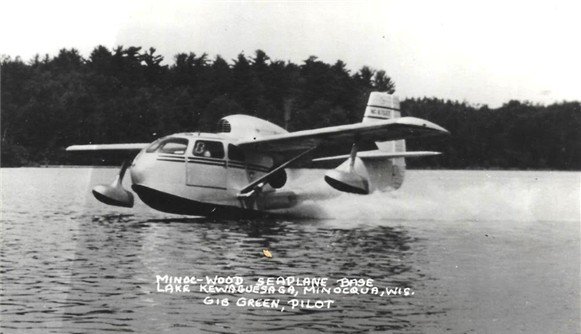
“I came home to Wausau and I just kind of laid around up at the cottage at Minocqua at least a year. Then I decided to start an airplane service of my own and I bought that Seabee. Got certification from the FAA and thought I was going to set myself up in business.”
Gib started operations in the summer of 1947. He paid $4,700 for the Seabee and learned what it felt like to put the hull of an airplane in the water—the experience he missed flying a PBY in the Pacific. He spent a few hundred dollars more to install a floating dock to moor the plane on Lake Minocqua and to buy a motor boat to ferry customers to and from the shore. In his first year he grossed $3,000. In his second year, 1948, he grossed $2,500 because “operation interrupted.”
He had higher hopes for 1949 but instead found himself dead in the water. In July the Town Board of Minocqua passed an ordinance stating that “no person shall maintain, operate or use any plane….for hire, either passenger or freight, upon any body of water located in this Township.”
As Gib told it in letters to Tom Jordan, Director of the State Aeronautics Commission, to Glen Knaup, President of the Wisconsin Aeronautics Commission, to the Wisconsin Attorney General, and to anyone whose ear he could bend, the town’s action was prompted by “a few wealthy summer residents,” who did not like the noise the Seabee made.
“It was noisy,” Gib admitted to Carl.
One of his allies in the battle was Minocqua Airport founder/manager and WAHF inductee Noble Lee. He wrote to the Aeronautics Commission to say that “the ordinance restricting commercial seaplane flying permits private aircraft to the use the lakes without reservation. This [ordinance] quite definitely defeats the development of aviation on the water, and consequently affects landplane flying adversely. If the ordinance goes unchallenged and is made effective, it very surely sets up a bad precedent for aviation development.”
Gib kept up the fight for a year. Lee advised him to defy it because he did not think the town would enforce it. An attorney Gib consulted said he could not sue to overturn it until he defied it and the town did enforce it. Gib found himself in the position of having to break the law in order to amend it.
Eventually he threw up his hands. In 1950, he sold the Seabee and moved to San Diego, California, to work in a grocery store owned by a distant relation. He stayed there for about 13 years before returning to Wisconsin. He opened a small “smoke shop” in Minocqua and ended his days looking at the lakes of northern Wisconsin from the ground.