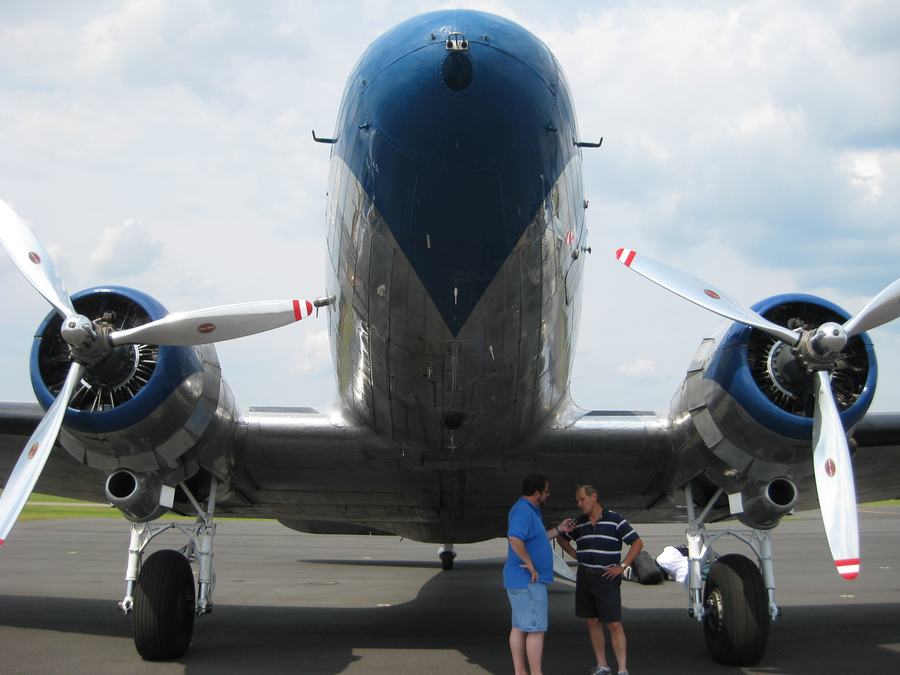
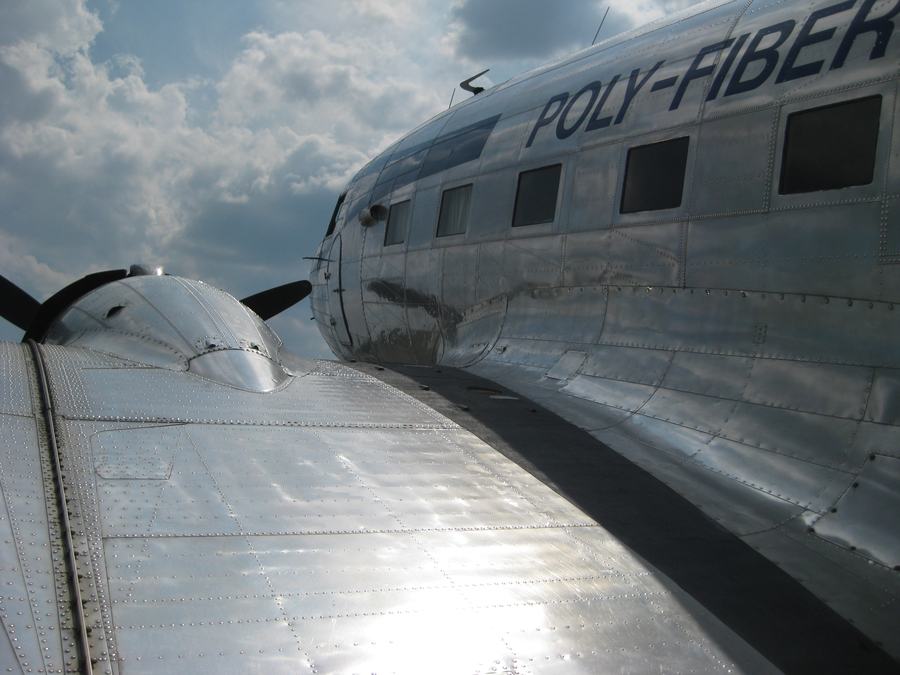
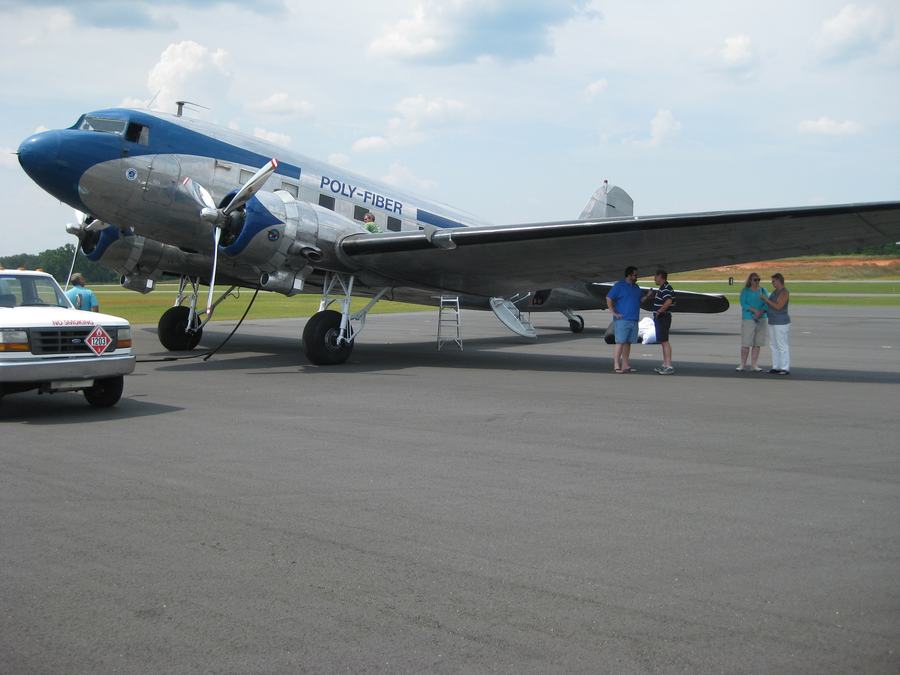
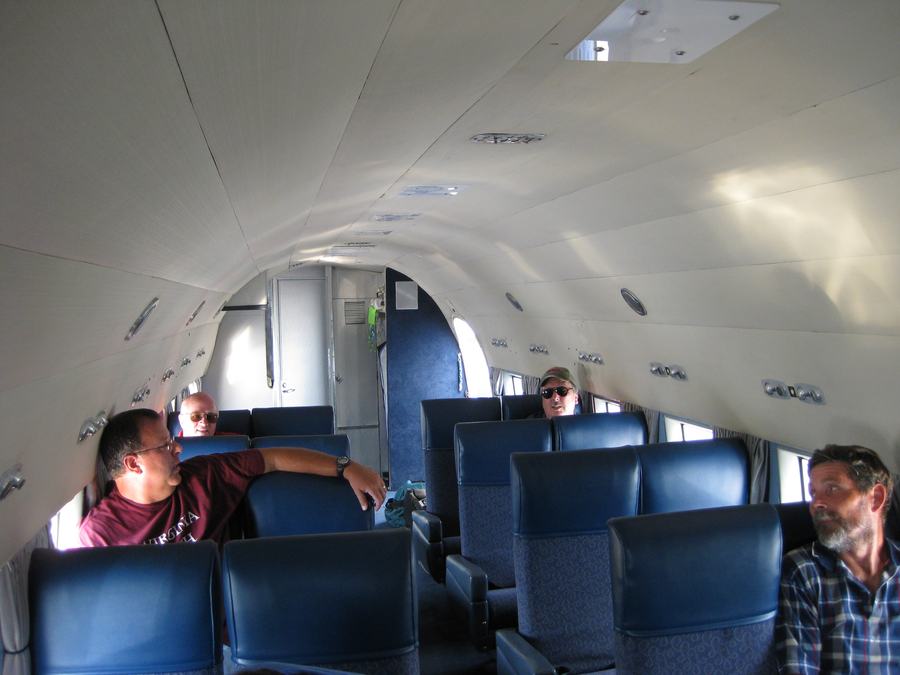
Ron Alexander has had a 20-year love-hate relationship with his Douglas DC-3. "It's a great old airplane has an unbelievable history. It's been a corporate airplane or an airliner all its life," the 68-year old retired Delta Airlines pilot tells me. Built in 1940, his DC-3 first flew for Braniff Airlines. More than 50 years later, it ended its commercial career with PBA Airlines.
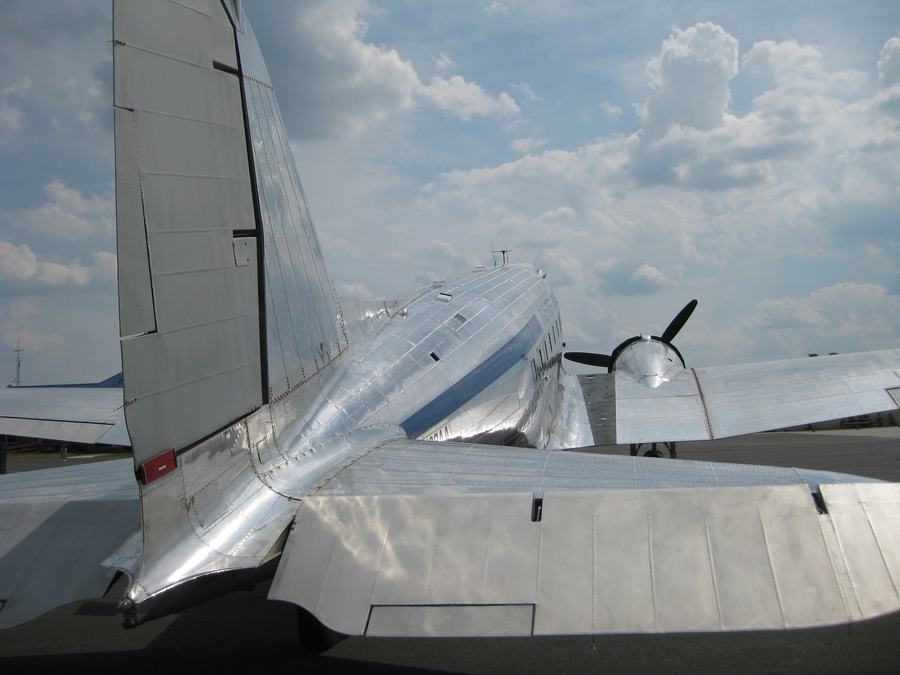
Alexander bought N28AA years ago and restored the cabin to a very comfortable passenger configuration. Actively involved in the operation of Delta's restored DC-3, Spirit of Atlanta, he uses his shiny silver aircraft, trimmed in blue, to help pilots transition into type before they take to the air in Delta's restored model.
Alexander loves this plane's history—its lines, its nuances, the way it flies. But he'll be the first to tell you, this love's not blind.
"Because it's expensive, number one, to fly," he tells me. "It burns almost 90 gallons of fuel an hour. And there's always some little thing going wrong someplace so you're always working on it or going someplace to fix it."
Alexander's expression, which had hardened a little, softens after a moment. The lines in his face ease, making it hard to believe he's 68-years old.
"It's just one of those things where you can't live with it and you can't live without it," he declares abruptly. "You just gotta have it and keep it flying so future generations can enjoy it."
"You sound an awful lot like a married man," I point out. Alexander laughs out loud. "You got it," he says. "That's very true."
Ron Alexander fell in love with flying as a boy growing up in Bloomington, Indiana. He soloed at 16 and became a commercial pilot two years later. After serving five years in the Air Force—including a tour in Vietnam that earned him the Distinguished Flying Cross and two Air Medals—Alexander joined Delta. He flew for the airline for 33-years, retiring in 2002. Now, he's painstakingly developing the Candler Field Museum in Williamson, Georgia. It's a full-scale model of the original Candler Field, Atlanta's first commercial airport, as it appeared in the 1930s.
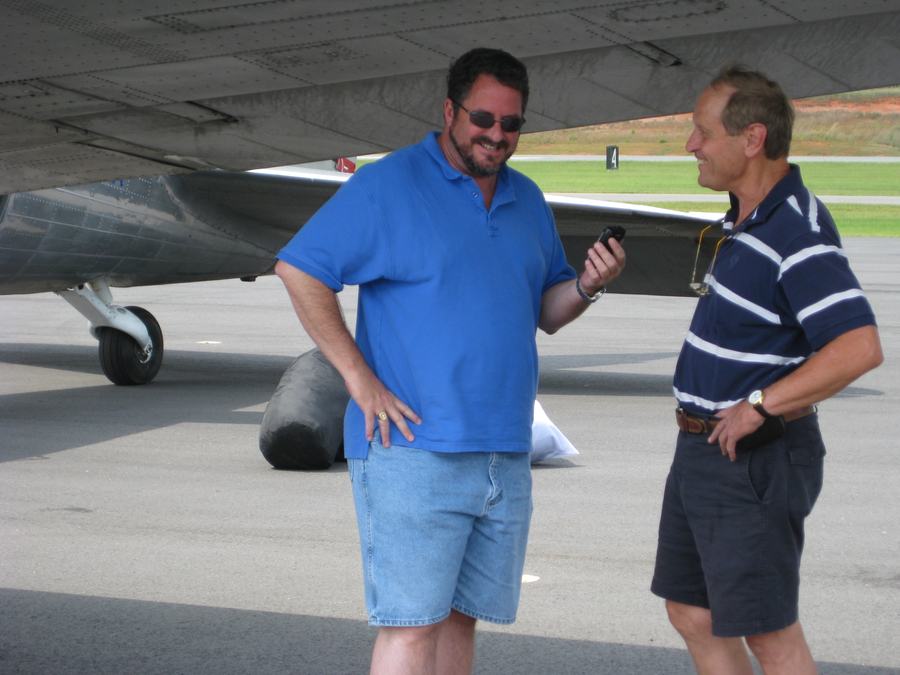
Alexander is pre-flighting the DC-3 at the airport in Thomaston, Georgia. This is how we're getting to Oshkosh.
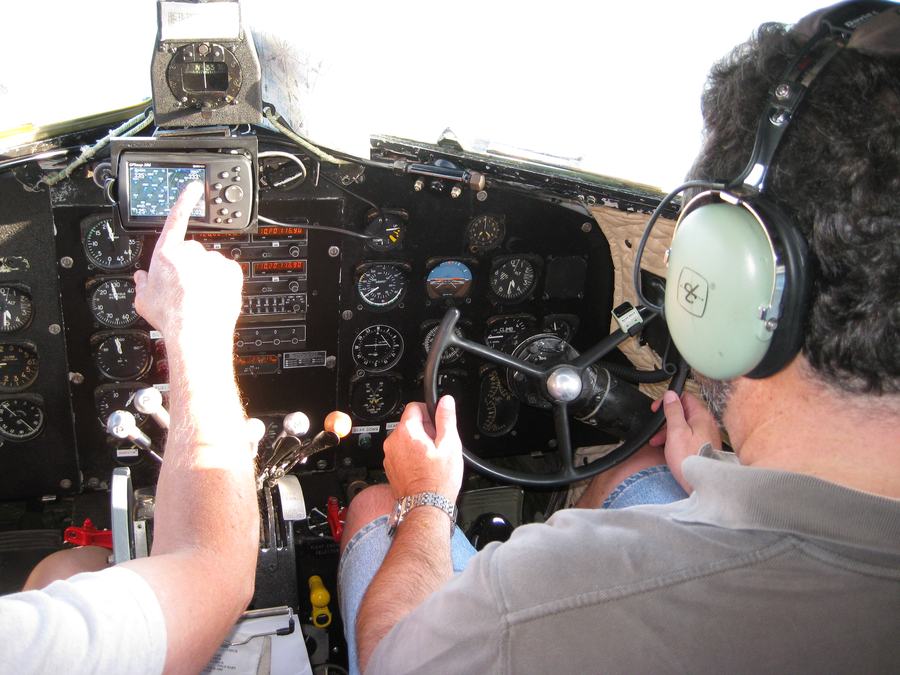
"Usually, when I pull up to an FBO, I tell 'em, 'Check the fuel and fill it up with oil!'" Alexander laughs. N28AA isn't at all tired, but it does have its quirks. Just one look at the pilot's right rudder pedal tells the story. It's an original piece of the aircraft, built in 1939 and delivered to Braniff Airways a year later. Exactly where you'd press down on the pedal with the heel of your shoe, there's a small hole worn in the smooth metal. "That tells a story all by itself," Alexander says.
Boarding the DC-3 is an uphill climb. Remember, this vintage aircraft is a taildragger. It sits majestically on the ramp at Thomaston, its nose already pointing to the sky as if yearning to fly again. It's hot in the cabin on this afternoon in late July. There's no APU, no forced air hose feeding a cool breeze into the stifling cabin. But strapping into a passenger seat in the first row, it's hard to notice the heat. You're too busy coming to grips with the fact that this is history and soon it'll be airborne.
After all 10 passengers are strapped in for the flight to Oshkosh, the right engine turns over. Alexander counts four full rotations of the prop before he actually starts the plane—one of the DC-3's many quirks. The engine catches. The left engine starts. Instantly, I'm transported back in time.
I'm a young boy of no more than six. My parents and I are flying from the new international airport in Tulsa, Oklahoma—an airport my grandfather built and manages. The sound of the radial engines is sonorous, hypnotic, a sound I've never forgotten. I remember first class, a tour of the cockpit, a badge declaring me a junior pilot. I can still see the gloved stewardess serving drinks first, then a full-course meal complete with fancy silverware and china plates. Then, snuggled in the seat next to my mom, I close my eyes, the droning of the engines my lullaby. This is what flying was like before jets, before super terminals, before security lines and baggage checks.
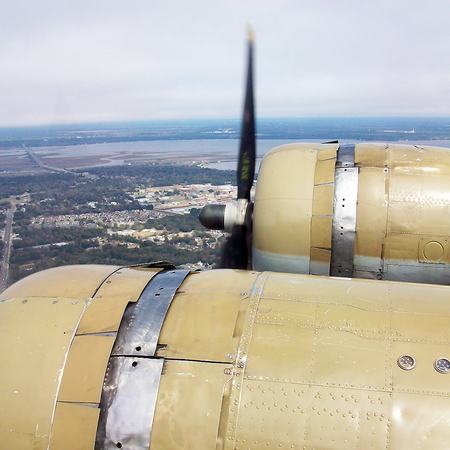
The windows aboard the DC-3 are huge. You can see almost all the way around the plane. Of course, the DC-3 flies low and slow. You can actually see the sights below and have time to appreciate them before they disappear under the wing. The air at this altitude is alive. Thermals lift the plane. The winds nudge and caress it as it plows ever northward.
Our first stop is Ron's hometown, Bloomington, Indiana, where we spend the night. The landing is so smooth that you hardly notice the tail settle until you've stopped and realize you're heading downhill to exit the aircraft.
Then it's on to Oshkosh early the next morning. On this leg of the flight, I get to sit in the right seat, flying the plane while Ron takes a break. We chat about his Candler Field project. The trim feels just a little funny. I can't dial it in. I learn later that a couple of the guys in the back are running up and down the length of the cabin, giggling like kids at the thought of me trying to figure out why the plane won't stay trimmed. That's kind of funny, right?
Ron points out the DC-3 is most effectively steered by its massive rudder. He demonstrates this by turning the wheel all the way to the right stop. The plane lazily begins to roll, but not much. Instead, my feet fly the plane, nudging it occasionally to keep it on course.
We hit a rain shower. As Ron takes the controls, I realize my knees are getting wet. "This is another of those quirks," Alexander says over the intercom. "These DC-3s are flying sieves." Water leaks through the windshield seals and onto our legs. "Back in the day, pilots would wear rain coats across their legs, especially in cold weather," he tells me.
"What about radios?" I ask. "Did they fry a lot of comms in the rain?"
"About as many as you'd think," he says. "Our stack should be pretty well insulated, but we learned the hard way." Alexander winks at me. Yikes.
As we slide west around Chicago, we can see the skyline in the far distance, backed by the hazy shimmering of Lake Michigan. The air is cool here, the flight smooth as glass. Beneath our wings pass farms and windmills and no small measure of history.
Soon we're over the low rolling hills of Wisconsin. Air Venture is just ahead now. As much as I look forward to the coming week, I realize it's true that old adage about travel. The best part of the trip really is, in this case, getting there.