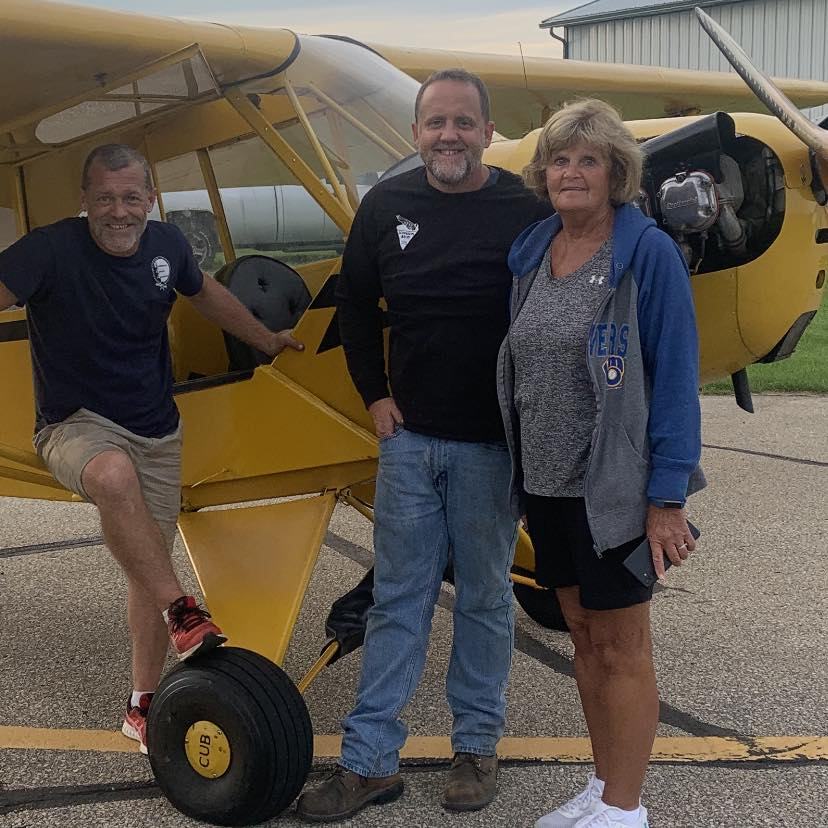
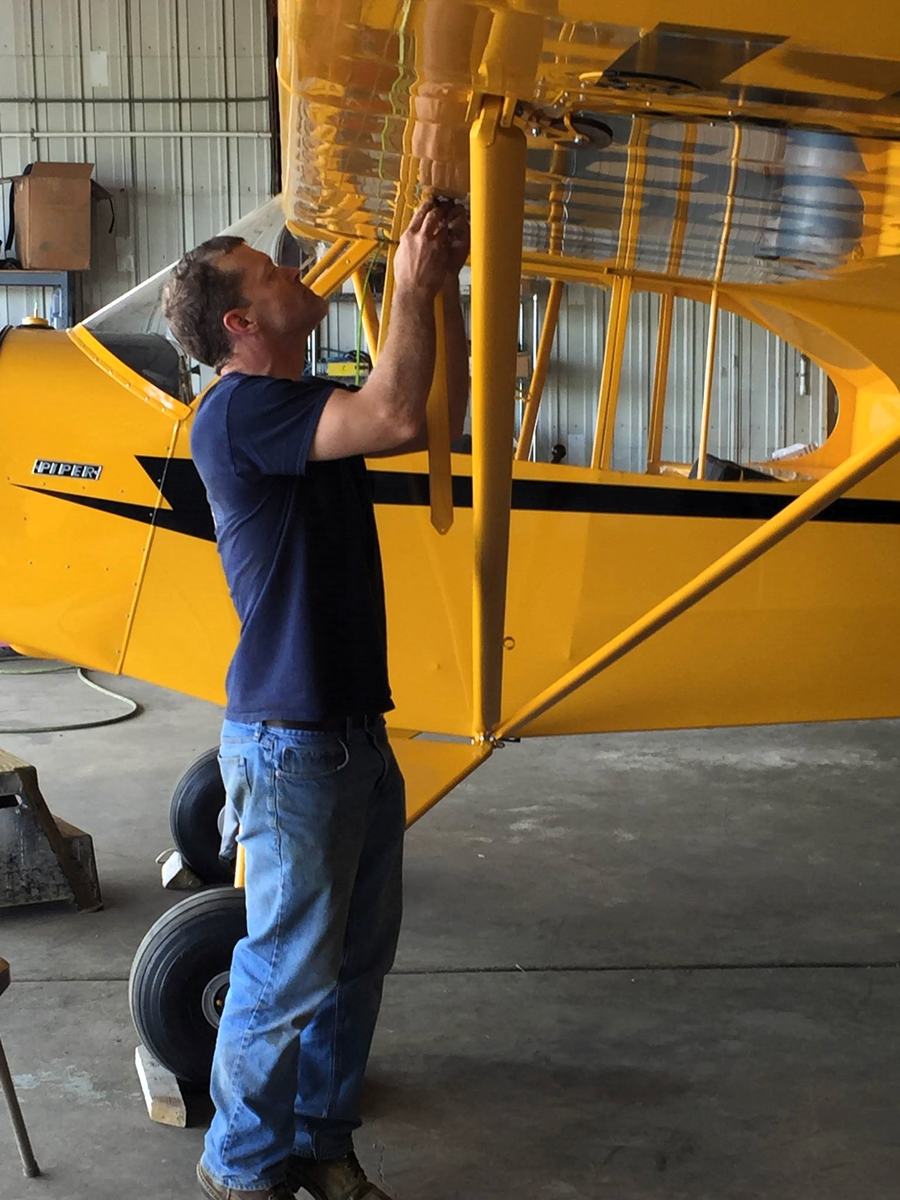
When Cory and Ryan Johnson, of Johnson Bros. Flying Service, talk about restoring airplanes, you can feel their appreciation for old airplanes—and the stories they carry. It's a trait that was born in the garage of their parents' home in Dodgeville, Wisconsin, where the youngsters spent countless hours with their father, Jerry Johnson. He had bought a 1946 J3C-65 Piper Cub in 1984 and completed a restoration of it three years later. Away from today's video games and cell phones, the boys helped, after school and on weekends, handing wrenches to their dad, and holding a trouble light at just the right spot.
Cory, 10, and Ryan, 6, were just the right size to squeeze into the back of the family's freshly restored Cub. "We didn't fly far," Cory remembers, "but flights like the ones to Sextonville [Richland Airport, 93C] for a smorgasbord meal were the best adventures. It was a real treat to fly there with my dad," he added. "We were like the three amigos, my dad, Ryan, and I."
Heartbreak and Resilience
In 1990, family priorities changed, and Jerry made the hard choice to sell the Cub to take care of needed repairs on their Dodgeville home. "My dad hated to see the airplane go, but he had to do it, being a responsible young dad," said Cory.
The boys were devastated too. "Ryan and I had a tree fort, and we sat in there for three days just bawling," Cory recalls.
Years later, as the boys grew, their aviation interest intensified. They bought and flew a Pacer, Skybolt, and other planes, often with their dad. After Ryan graduated from high school, he enrolled in the Airframe and Powerplant Mechanic program at Blackhawk Technical College in Janesville. In 2008 Ryan was selected for WAHF's Jerome Ripp Memorial Scholarship and in his application he stated his goal to open a maintenance facility that specializes in antique aircraft restoration. He said at the time, "Aviation has always been the center of my life, my passions are working on and flying airplanes."
And that's exactly what he did. He worked as a mechanic at Morey Airplane Company in Middleton until an opportunity came along to open a shop at Tri County Regional Airport (KLNR) in Lone Rock, Wisconsin, in 2014.
Dreams of Restoration
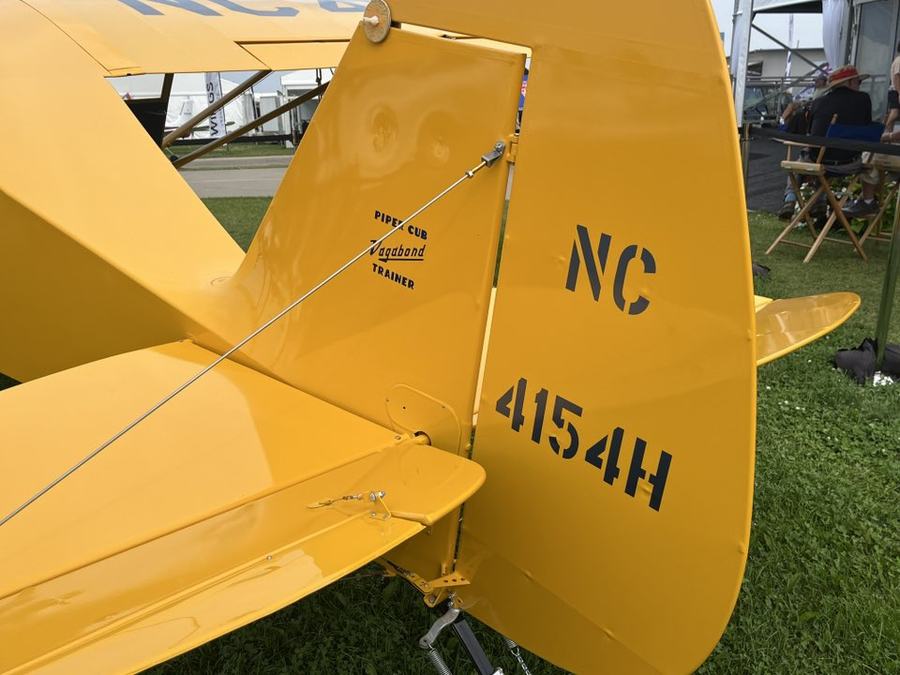
But before that, Ryan and Cory had restored a Piper Vagabond. It went on to win Silver, and then Gold Lindy awards in about 2008 and 2009. They flew it before handing it over to the owner and realized how much they liked it—how much they would like to own one. So they started looking for one. At EAA AirVenture Oshkosh 2012 they studied the "Aircraft for Sale" bulletin boards and found one, located in Long Island, New York. It was Serial Number One; it came off the Piper line on March 5, 1948.
"Cory called, and made the deal, so Cory, Dad, and I drove out," Ryan said. "It was a basket case, with bad tubing, bad wing spar. It had sat outside for a long time." The brothers have had the Vagabond in their hangar since then. As business grew, the project got pushed to the side. And then, in 2023, they found their dad's Cub. They realized, after their dad passed away, how much the plane meant to them. After all, this was the very plane that got those two young boys interested in aviation. Ryan and Cory contacted the owner in New York. Sadly, he wasn't ready to part with it just yet. If he were to sell it to them, he wanted Ryan and Cory to find a different plane for him to buy.
Undeterred, they stayed in contact. "We explained it was our dad's plane, and about a month later he found a different airplane to buy, and he felt sorry for us, I guess," Cory says. "Plus his wife told him he should sell it to us, so he finally agreed to it. It took a month of calls, but we loaded up the trailer to head out east again," Cory said.
And once they got their dad's Cub, N2168M, back home to Wisconsin, emotions and memories flooded their minds. "As we looked at the logbooks, it was like reliving our childhood," Ryan said. "Dad would tell us, 'Be quiet, I have to write this letter to the FAA,' and now we have those letters."
Keeping the Flame Alive
To afford their dad's Cub, the brothers made the difficult decision to sell the 1948 Vagabond, just like dad had to do years back. The local buyer wanted the restoration to be done before EAA AirVenture Oshkosh 2025. That's why they're working on it now, restoring it as authentically as possible. There have been several challenges along the way.
"Duplicating the sheet metal, making it identical to the original, that's a challenge," Cory explained. "We had the original sheet metal, but it was in rough shape, unusable. Piper built an airbox for the carb just for the PA-17. Ryan found prints and custom built it," he added.
Ryan and Cory are maintaining the authenticity of the aircraft; they don't aim to use new parts, but to use the originals. However, they will incorporate one modern material. "The only thing that won't be authentic is the fabric, we've used Dacron/Ceconite, because it won't rot like cotton," Ryan said. "This is a lifetime fabric." All hardware will be era-specific, everything as if it had been built in the 1940s. Standard AN hardware, unshielded wire harnesses, for a truly authentic restoration.
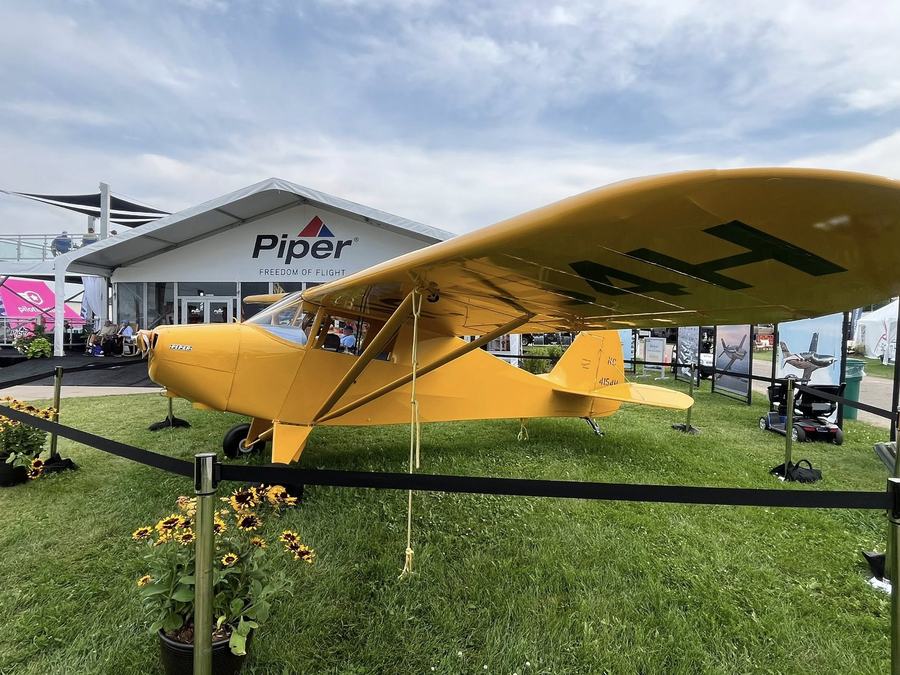
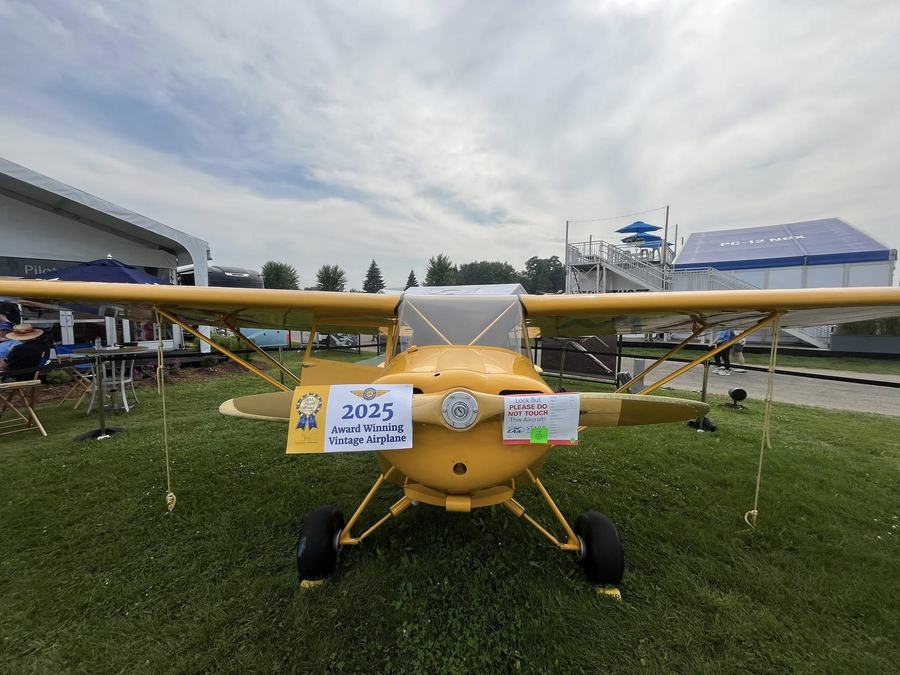
With the sheet metal and covering done, it's been painted in the Johnson Brothers' paint booth, with twelve coats for a less shiny, matte finish. "Less shiny, more authentic looking," says Cory. The new owner may fly it as soon as May or June 2025. The Johnsons are pleased that the plane will stay in the area, they know the owner will fly it to local events, such as fly-ins at Brodhead. In fact, the plane will be displayed in the Piper Aircraft booth at EAA AirVenture Oshkosh 2025. It's sure to draw attention!
If you don't think that the restoration of a first-off-the-line airplane is important, you might not know this Piper model's history. It should come as no surprise that this award-winning restoration team know of the significance of this plane.
"There is a cool factor that goes into restoring this Vagabond serial number one," said Ryan. "The Vagabond became a turning point of history; it made the Piper company profitable again." He's read the history. In Spring 1947 Piper was facing bankruptcy and hired past Chrysler executive William Shriver to save it. "He laid people off, and instructed an engineer to design a simple, cheap airplane using available materials on the shop. The Vagabond had shortened wings from a J-3, and a shortened fuselage, with single controls. Piper had used Continental engines, but Lycoming was located closer. They saved money by going with Lycoming, lower shipping costs. The plane became successful; it was a nice flying airplane."
They've uncovered some curious discoveries during the restoration. "Yeah, the way things were done back then," Ryan said. "The brackets had been welded, for a second set of controls. But for the -17 they were bolted on vs. welded." They've had a challenge finding someone who can spot weld aluminum, but in the end, with the plane steadily nearing completion, everything is working out. It's hard not to admire their perseverance.
Full Circle
And once the Vagabond is complete, Ryan and Cory know that the plane will mean a lot to aviation history, that it exists at all. It'll mean a lot to them personally that this Vagabond, serial number one, is fully restored and flying again, and that it will be 90 percent original," Ryan explained.
"After the first Vagabond we restored people couldn't believe that an airplane this simple could fly," he added. "As this restoration progresses, we have an even greater appreciation for the plane's simplicity—and the beauty that goes along with it."
And more importantly, Cory and Ryan know they will hear many heartwarming stories from past and current Vagabond owners once this one is fully restored. They know from experience that airplanes help people relive childhood memories. They'll never forget the lengths they went through to acquire their fathers' airplane.
"Some people think it was just an old airplane," Cory said. "Our dad used to remind us not to get too attached—it's just metal and fabric. But for him, and us, it was always more than that. He did get attached to it. The best memories he had, and we have, are the three of us going on airplane trips together."
Each airplane, each restoration project, carries its own importance, but the Vagabond S/N 1 and their father's Cub represent something special, reminders of Piper's resilience and their family's shared history. In the minds of Cory and Ryan, their Cub, N2168M, is just as special as the Vagabond, because it was the spark that ignited their love for aviation when they were just boys. With over 100 flying hours logged in it since returning it to their home, the spark burns just as brightly today—as steady as the trouble light they held for their father all those years ago.
Q&A with Ryan and Cory Johnson:
Q: When you first saw the condition of Serial Number 1, what went through your mind? A: I thought it looked like how I was imagining it would. It was in rough shape, and the Long Island seasons had taken their toll on it but all and all it seemed quite complete and restorable.
Q: Was there a particular challenge during the restoration that nearly stopped you in your tracks? A: Not particularly, we've been lucky to gain quite a bit of experience with vintage Piper aircraft over the years so there weren't really too many challenges with this aircraft that we haven't encountered before. I would say one of the biggest challenges was trying to complete it by Oshkosh 2025 and having the stress of completing the doping of the fabric in what was a very humid spring and first half of summer, you can't really spray but rate dope when the humidity is above 70 percent.
Q: If Serial Number 1 could talk, what do you think it would say about its new life? A: I would think it would be happy to have been completely restored and living the best life now. It will be flown regularly however it will be cared for like a collector's item.
Q: What part of the restoration are you most proud of, and why? A: The thing I'm most proud of is the accuracy to authenticity we were able to achieve, and all the tiny details that were added that didn't really need to be for any other reason than authenticity. We achieved a "factory fresh" look of the aircraft once it was completed. To me it looks like something you'd have seen sitting at the Piper factory in 1948.
Q: During the restoration, did you ever have a "what on earth did we get ourselves into?" moment? A: Not really, other than wondering if we'd over estimated our ability to have it completed on time for Oshkosh 2025. In the summer of 2024, we made a commitment to Piper Aircraft to have it in their display as their Heritage Aircraft for 2025.
Q: How did it feel to see the Vagabond win a major award at AirVenture this year? A: It was a huge honor for the aircraft to be recognized as the Classic Grand Champion for 2025. The award is for aircraft manufactured between 1945 and 1955. I consider it a very prestigious honor, and it validated the hard work and extra effort that was put into the restoration.
Q: What does the preservation and restoration of this specific aircraft mean to you personally — and to aviation history? A: To me it's quite special, my brother and I have been enamored with vintage aircraft our entire lives, particularly Piper Aircraft. We've gained a great deal of appreciation for the excellent products Piper produced and their efficient way of manufacturing those aircraft. So for me, it was an effective way to represent and honor a brand we've become quite loyal to. And it feels good to hopefully have saved a historical aircraft from the fate of being parted out or scrapped entirely.
Q: Can you share the owner's name, and his plans for it? A: The new owner is Joe Kloke, and he will base the aircraft at Iowa County Airport (KMRJ). He intends to fly the aircraft as often as possible and fly it to various events so that anyone who is interested in seeing it can do so. That may be the best news of all.