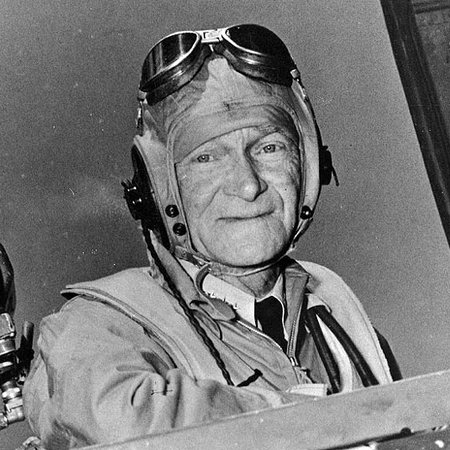
One hundred years ago, A.P. Warner became Wisconsin’s first pilot when he flew his Curtiss Pusher, with its 25-hp engine, off the Morgan Farm in Beloit. Just 50 years after Warner’s flight in 1909, Deke Slayton of Sparta was selected as one of our nation’s first astronauts in 1959. NASA presented the Mercury 7 astronauts to the country on April 19, 1959.
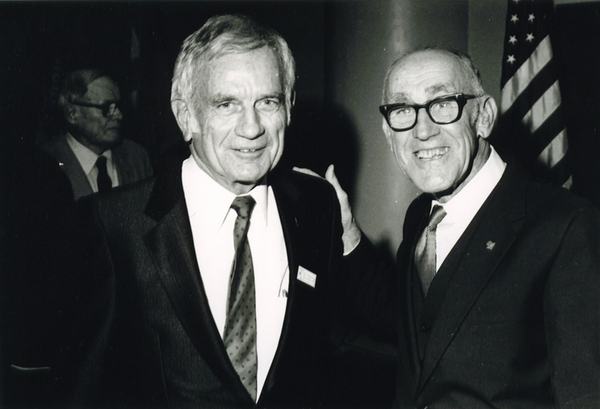
Those first 50 years included two world wars, the development of helicopters, jet aircraft, and rockets. In all of history, the growth in technology had never taken such quantum leaps. We’ve walked on the moon and now have an orbiting space station that’s continuously staffed by people from different countries around the world. With rocketry gaining in popularity, heads turned skyward as satellites began orbiting overhead.
Wisconsin was at the forefront of this new technology with our own Deke Slayton. He gave us the first foot on the ladder for many of us to dream of flight in the sky and in space.
Growing up on a farm near Sparta, near the Camp McCoy Army Air Corps landing field, Deke would have seen the military aircraft flying overhead as they traveled back and forth to Fort Sheridan on Chicago’s north side and to Fort Snelling near Minneapolis. With the threat of war breaking out in Europe in the 30s, military aircraft were often the news. Germany attacked Poland on September 1, 1939 by land, sea, and air. Aircraft played a major roll in the invasion and Germany’s quick defeat of the Polish Army. War in Europe had begun.
Back across the Atlantic, we were watching with keen interest as the newsreels in the movie theatres showed films of military aircraft twisting, climbing, and diving. This gave rise to many high school students dreaming of becoming a pilot. In 1940, when Deke was enrolled at Sparta High School, the opening day of the Wisconsin State Fair, August 17, 1940, was named “Aviation and Defense Day” and featured a 75-airplane formation flying overhead. On August 22, 1940, 65,000 National Guard and Army units took part in the largest peacetime military maneuvers since WWI at Camp McCoy. Flying out of the Madison Airport, 56 Army Air Corps aircraft were scheduled to take part in the exercise. The weather was bad at the time and the aircraft were grounded by rain and high winds. However, Army aircraft had been flying in and around McCoy’s airbase, ranges, and around the surrounding countryside, which included the Slayton farm. Deke was enthralled and upon high school graduation, he enlisted in the service, hoping to become a pilot.
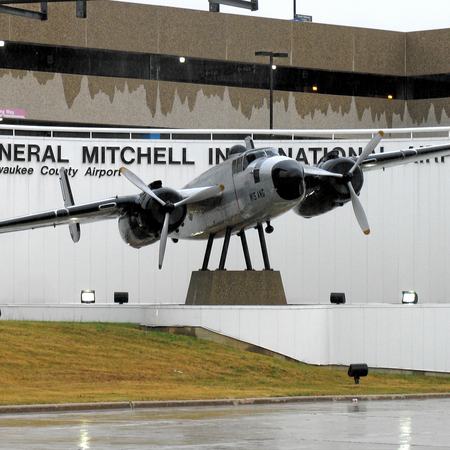
He was selected as an aviation cadet, earned his wings in 1943, and was chosen to fly the B-25 Mitchell Bomber in Europe. Deke completed 56 combat missions and then returned to the states to become a B-25 instructor in 1944. He also trained in the A-26 and served in the Pacific, completing seven combat missions over Japan before the end of the war.
At war’s end, Deke returned to the states as a B-25 flight instructor. When his commitment was complete, he attended the University of Minnesota, obtaining an aeronautical engineering degree and took a job with Boeing Aircraft Company in Seattle. With the outbreak of the Korean War, he was recalled to active duty. He remained in the Air Force to become a test pilot at Edwards Air Force Base in California. He was flying the F-106 when selected to be one of our nation’s first astronauts.
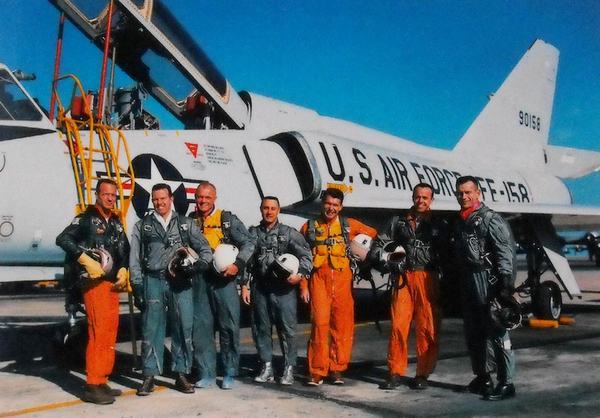
Deke was scheduled to go up as the fourth Mercury astronaut in Delta 7, but due to a heart murmur found on a flight physical in August 1959, Scott Carpenter was assigned that mission. Deke stayed with NASA, becoming a director of flight operations. His medical issues were eventually resolved and he made his first space flight as Apollo docking module pilot of the Apollo-Soyuz Test Project mission in July of 1975. This was a joint space flight culminating in the first meeting in space between American astronauts and Soviet cosmonauts. This mission marked the successful testing of a universal ‘generic’ docking system. It paved the way for conducting joint experiments and the development of the international space station were men and women from many countries across the world have served to advance science for the betterment of humanity.
In 1988, Deke Slayton became the first astronaut from Wisconsin to be inducted into the Wisconsin Aviation Hall of Fame. Eight years later, he was enshrined in the National Aviation Hall of Fame in 1996.
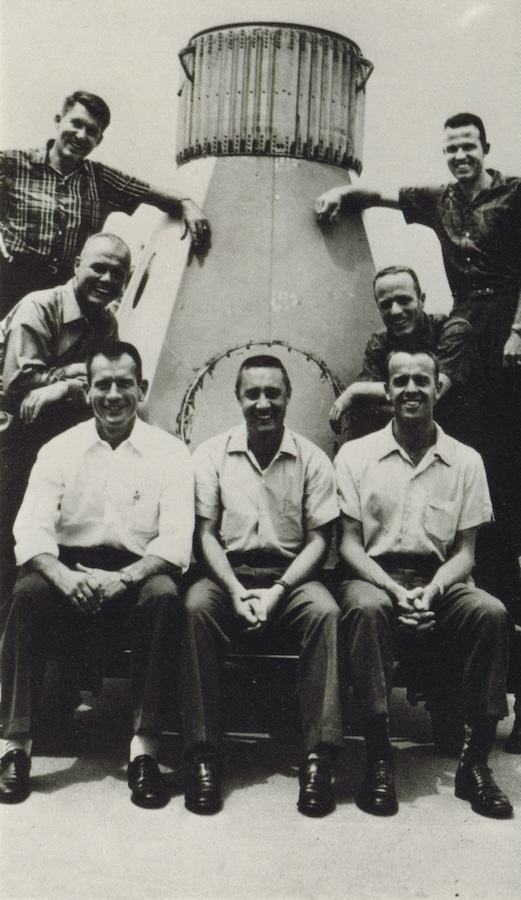
Throughout his life, Deke Slayton’s spirit was aloft. He lived his dream of flight and it took him into outer space. His significant accomplishments in aviation and space are a legacy of a champion and they continue to inspire Wisconsin’s youth today to think beyond the stars and set their sights “to infinity and beyond.”