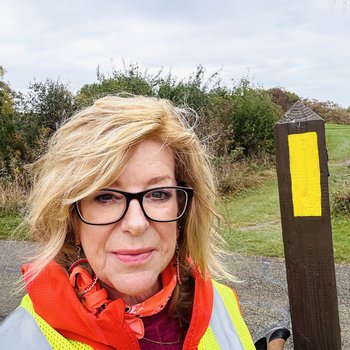
Virginia Helen Gallenberger was born in Milwaukee, Wisconsin, in the year 1947. At a very young age, Virginia and her family moved to Wauwatosa. She attended St. Bernard grade school and graduated in Spring 1961. By that time, she was already a determined aviator.
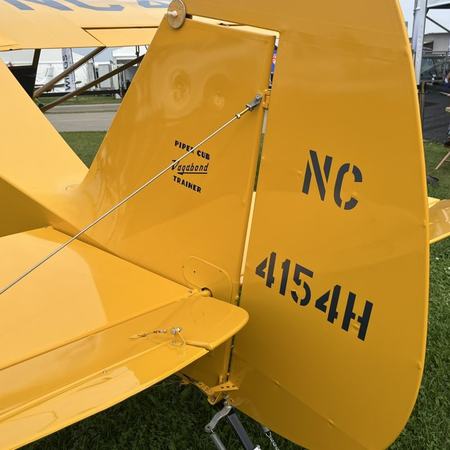
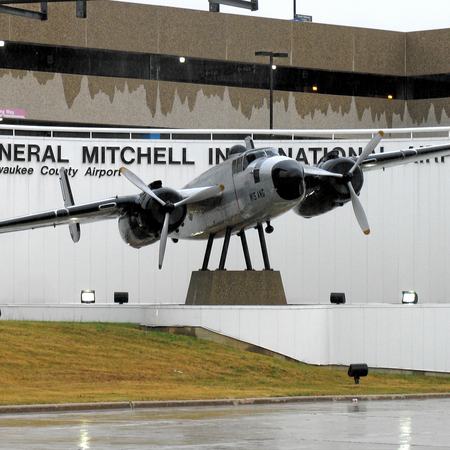
Virginia's next-door neighbor, a flight instructor, took her on a flight in his Piper J-3 Cub when she was about 13 years old. Then in 1961, she took her first official flight lesson at the Piper dealer located at Milwaukee's General Mitchell Field. The date was March 31, the aircraft a Piper Colt. She soon continued her lessons at Spring City Flying Service in their Cessna 120 and Cessna 140 trainers. Under the guidance of Dale Crites, Dean Crites, and Harlan Sedgewick, she began building flight time.
With 96 hours logged over three years, she finally turned sixteen and soloed on her birthday in the Cessna 140 in September 1963. Dale even let her solo his beloved Cub N3676K.
"Now that was fun!" she said. "The solo went just fine. Three takeoffs and landings and I was signed off. A few days later I soloed a Cessna 172 and the Piper J-3 cub."
Her 17th birthday was a momentous day—it was private pilot test day with Harlan Sedgewick.
"The Private Pilot flight test was in September 1964 in the Cessna 172 and was pretty much routine," she recalled. "Everything went well, but then I had a lot of flight time, and a lot of support from everyone at the airport."
While she got great support from the Crites brothers and Harlan, she said her mother did not like her learning to fly. Her father was okay with it, she said. Dale, Dean, and Harlan were also her bosses. Virginia was hired to work in the office on weekends to earn money for flying lessons.
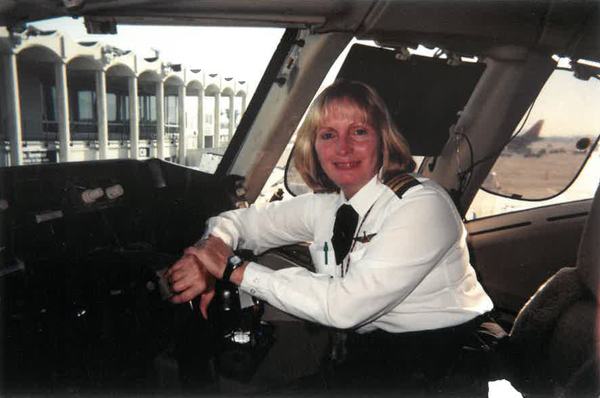
Her aviation interest grew. She became an honorary member of the Waukesha Flying Club. She joined the Civil Air Patrol's Milwaukee Composite Squadron 5 at MKE. Virginia graduated from Wauwatosa East Senior High School in 1965 and took on several jobs to earn enough money to obtain an Instrument Rating, Commercial Certificate, Flight Instructor Rating, and Multi-Engine Ratings by the age of twenty-one.
Shortly after that Virginia began instructing at Hales Corners Airport on a part-time basis—just down the road from Paul and Audrey Poberezny's EAA headquarters. Additional ratings included Instrument Flight Instructor, Multi-Engine Flight Instructor, and Advanced Ground Instructor.
Years passed and flying jobs became scarce—especially airline jobs for women. It was time for change. Virginia packed the car and headed south to join her best friend in Ft Lauderdale in 1977. She found instruction work at Broward County's Ft. Lauderdale-Hollywood airport (FLL) at an upstart flight school as Chief Instructor. One year later the school closed. It wasn't long and another flight school opened; Virginia went to work immediately. She also became an FAA Gold Seal Instructor.
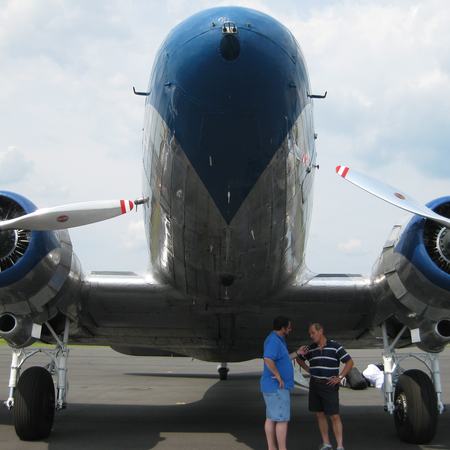
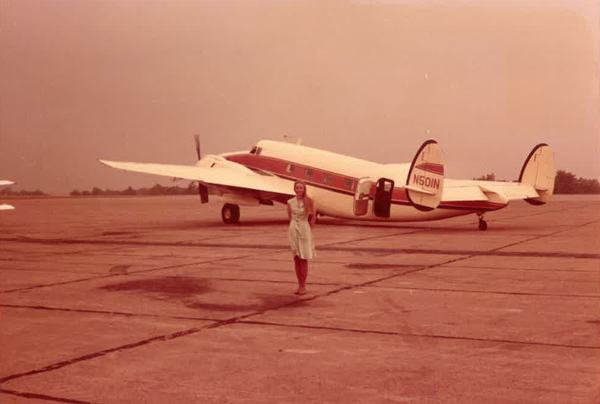
Virginia made many contacts and started to fly copilot on larger twin airplanes, mainly a DC-3, Howard 400, and C-46. Trans Island Airways had an opening for a charter pilot, and this required her first PIC check with the FAA. Things were moving upward.
When the flight school closed, Virginia relocated to Fort Lauderdale Executive Airport (FXE) and joined the Piper Dealership as Chief Pilot for the 141 School. Working at this school provided her the opportunity to become an FAA Designated Pilot Examiner. It was now the 1980s and she upgraded to an Airline Transport Pilot Certificate - Single Engine Land and Sea, and added Multi Engine Land. Another year later a CE-500 rating for the Cessna Citation. During this time she attended Broward Community College and earned an Associate Degree in Aeronautical Science, graduating on the Dean's List.
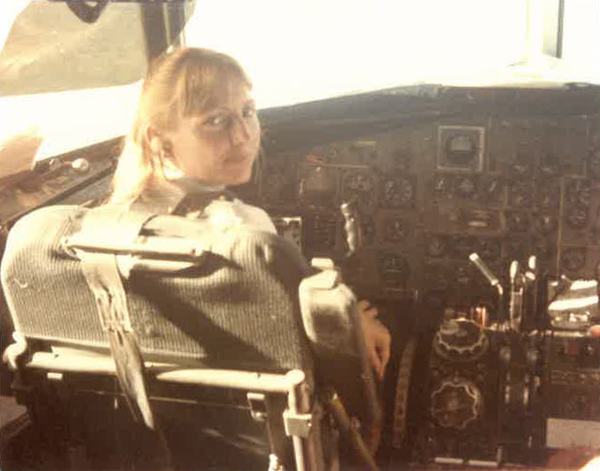
In the years 1983 and 1984 Virginia flew Air Cargo with Amerijet International. The company operated Cessna 402, Lear 23, and the Falcon Jet model 20. In 1984 and 1985 she flew with Florida Express, a Regional Part 121 Airline. It was Virginia's first Captain position, flying a BAC 1-11. From there she was off again to a North Carolina company flying Falcon 20 and Falcon 50 jets. "It was very nice corporate flying," she said. And she added two more type ratings on the DA-20 and DA-50 during this time.
However, "big jet fever" was contagious so Virginia applied for a job with Pan American World Airways and was hired. Class date was May 27, 1987. She began Flight Engineer TurboJet training on the Boeing 727. "This aircraft was so huge compared to previously flown ships," she recalled. Training and all check rides were successful.
"It was an airline pilot dream job of a lifetime with America's Flag carrier," she said.
Upgrade time came after one year to first officer on a Boeing 737. In preparation, Virginia acquired an ATP Multi-Engine Sea rating in a UC-1 Twin Bee amphibian to refresh her piloting skills.
A year later she was offered a training captain position on the B-727. Back to school for a Type Rating on the B-727. After a year, her career included another upgrade, this time to the wide-body French jet, the Air Bus A-310—and another type rating. Her flying became mostly ocean crossings to Europe and South America. After a year she was back to the flight training academy as a training captain on the A-310.
During this time PanAm sold the North American routes to Delta Airlines. PanAm was looking at bankruptcy. The only pilots to be transferred to Delta were those qualified on the Air Bus A-310. Luck was with only a few and Virginia went to Delta Airlines in November 1991. The next twelve years were spent flying first officer on the A-310, B-727, B-737, MD-88, B-757, and B-767, with occasional bumps back to flight engineer on the B-727.
"The years spent with Delta were busy, with constant training both initial and recurrent," she says. "Always away from home and studying for the next check ride. Somehow there was an extra moment to finish a Bachelor of Science Degree in Aeronautics from Embry-Riddle Aeronautical University."
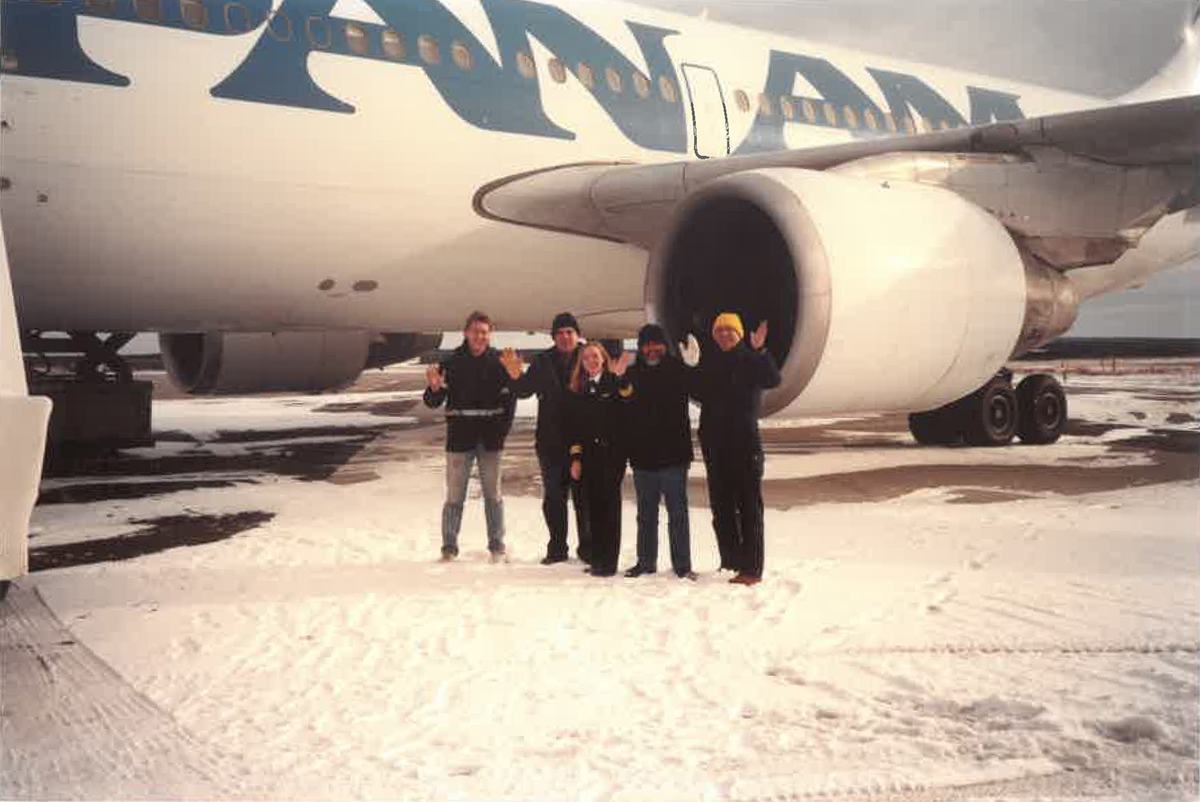
About this time, in 2004, Delta Airlines had a looming bankruptcy. Virginia made the very difficult decision to gather her benefits and put in for an early retirement in June 2004. Her total flight time is around 16,000 hours plus about 3,500 as a Flight Engineer. She has about 2,000 hours of instructing in small aircraft, around 500 hours instructing in the B-727 Simulator, plus about the same in the AirBus Simulator.
"It was the best of times and a lot of hard work," she says. "But the rewards were a lifetime of memories and accomplishments."
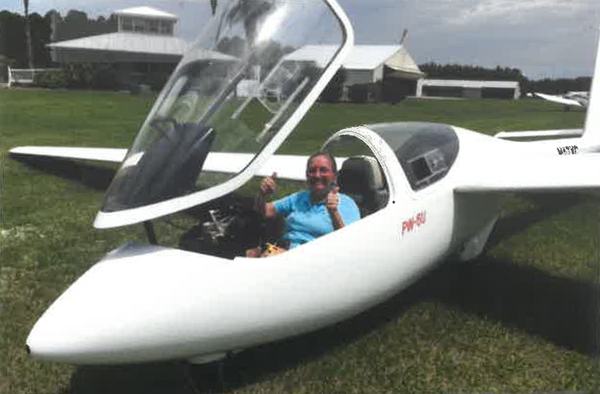
After retirement Virginia took college courses to fill her time and added Instrument Ground Instructor to her impressive list of ratings. She flew a few hours of glider time and did a solo flight in a PW-6U. Always learning in her retirement, she acquired a Drone Pilot Certificate in 2016. Her career of 16,000-plus flight hours is admirable.
In June 2016, the FAA awarded Virginia with its prestigious FAA Wright Brothers Master Pilot Award, for those pilots who have 50 or more consecutive years of safe flight operations.
MORE TO HER STORY
A full life to be sure. If flying airplanes wasn't enough, she challenged herself in other areas. She rode motorcycles for 40 years, played accordion in school plays and in band, and was a master scuba diver. Astounding energy!
She lives in Florida with her copilot, Millie, a Beagle.
While researching information about Virginia we ran across this brief story that Virginia wrote for the May 2017 Women Soaring newsletter. We thought it worthy of sharing...
As a young girl, I would dream of being a stewardess and the adventure of traveling all over the world. This was the late 1950s and early 1960s, the age of glory and wonder for the airline industry. However, in 1960 my neighbor, a flight instructor, took me for a ride in his little yellow Piper Cub. Once airborne, he gave me the controls and I was flying! I was hooked and now my dreams were of being a pilot, a real pilot. Not an easy task to start in the 1960s. There were very few women pilots and no women airline pilots, nor were there women flying in the military. But stage one was set. I was going to fly!
March 31, 1961, marked the date of my first flying lesson at MKE airport, flying a Piper Colt. It was the date that launched a 56-year career of flying airplanes; and I was just a young girl, 13 years of age. Persistence and patience produced a solo flight on my 16th birthday, a private pilot license on my 17th birthday, and yet the future years sometimes seem a blur…
More ratings included Commercial Certificate, Multi-Engine Rating, Instrument Rating, Flight Instructor Ratings, and a position as a Designated Pilot Examiner, a college degree, then on to an Airline Transport Pilot Certificate, and many Jet Type Ratings. And of course, a Flight Engineer - Turbojet, and for fun - Sea Plane Ratings SE/ME. The jobs were exciting as well: Flight Instructor, Charter Pilot, Corporate Pilot, Regional Captain, Major Airlines (Pan Am and Delta Airlines). The many ocean crossings, foreign lands, all-night flights, crisscrossing the globe and our great country. The numerous check rides and constant training on newer and bigger airplanes became a weary life of sweat and hard work. But what a life it was. I would not trade it for anything!
But now time has come full circle in my life. I am back where I started. In 1963, as a student pilot, I worked in the office of the local airport to pay for my flying lessons. Now, the year 2016, I work in the office of the local glider port to pay for my glider lessons and learn a whole new part of flying that I have not known before - soaring. I am learning to sail the great oceans of air that have eluded me thus far; to be able to hear the wind and feel the mighty lift from clouds that offer the gift of flight. The Art of Soaring is a whole new world, and a great new adventure that this old gal of 70 years has found and now dreams of.