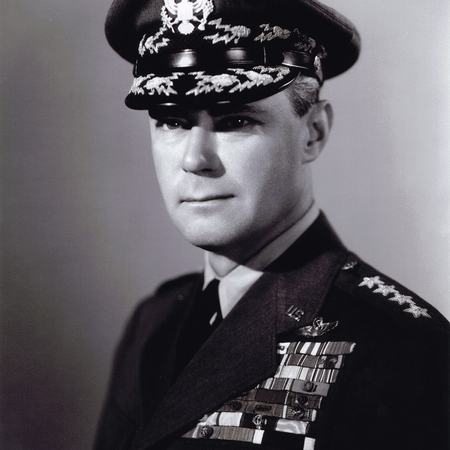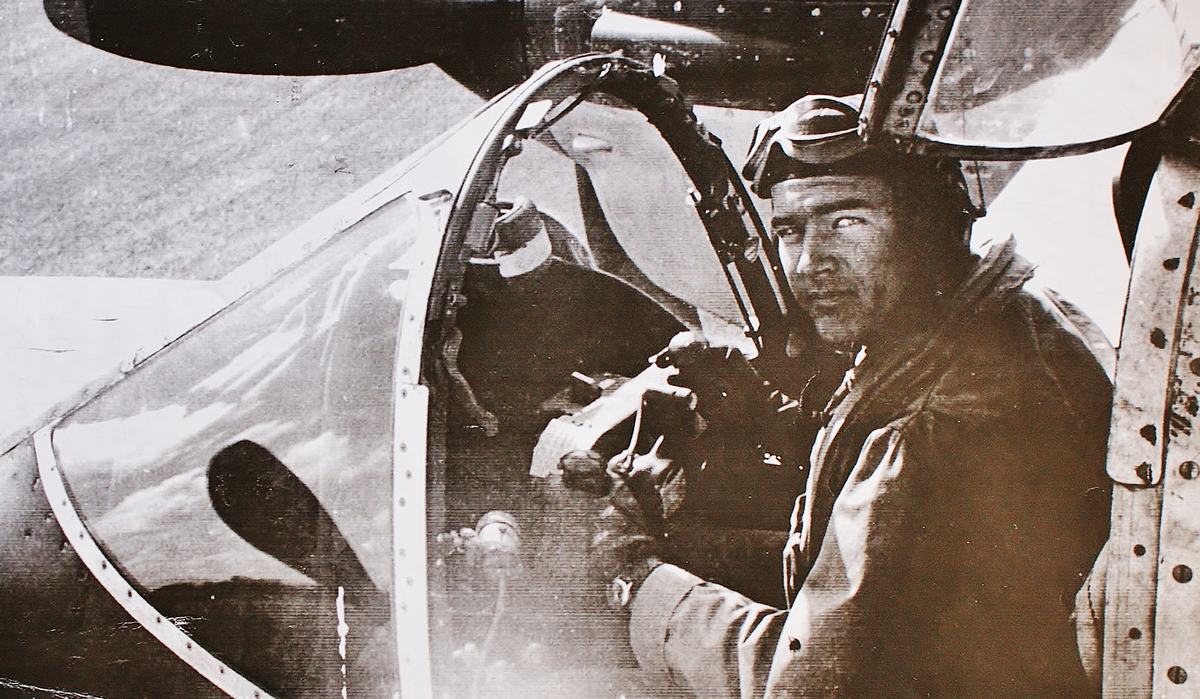
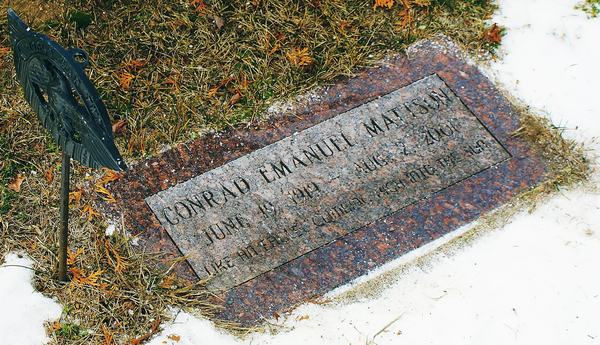
From the heart of Wisconsin came a young man born of a Swedish emigrant to become one of America’s “Greatest Generation” and Wisconsin’s first jet Ace. Conrad (Connie) Emanuel Mattson was born in Stevens Point, Wisconsin, on June 19, 1919. His father, Pehr Emanuel Mattson, was born in Sweden and immigrated to America in 1904, initially settling in Elgin, Illinois, where he married Augusta Anderson in 1906. They moved to Wisconsin Rapids in 1915, where Pehr worked for the Consolidated Water Power and Paper Company. In 1919 they moved to Stevens Point, Pehr working for the Stevens Point Pulp and Paper Company until retiring in 1948.
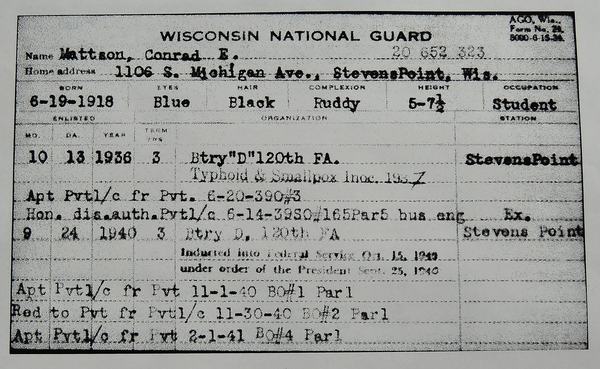
Connie Mattson grew up in blue-collar central Wisconsin, with all its strong core values. In his youth, Connie enjoyed skiing, baseball and football, along with fishing and hunting. Upon graduating from Emerson High School in the Class of 1937 in Stevens Point, he enlisted in the Wisconsin National Guard the following year. This demonstrated early on that he’d believed in giving back to his state and country. Even though the Depression was still being felt nationwide, Connie recognized what a gift he had in being an American. The world was in turmoil and come 1940 with heightening tensions, Connie Mattson was ordered to active duty.
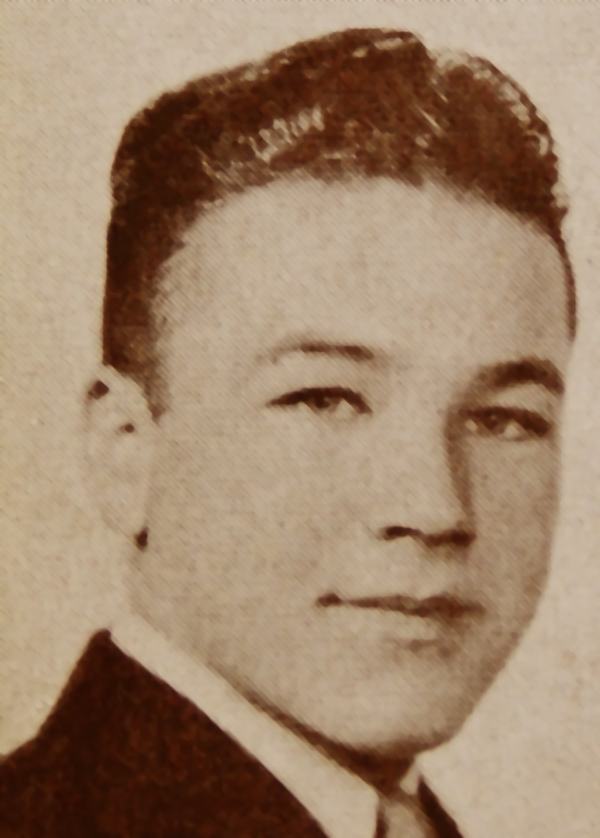
Being in artillery wasn’t quite the military career he’d dreamed of so Connie applied for a pilot training slot in the Army Air Corps. To make the cut and get selected for pilot training one had to be well-above average. Winning a slot, he entered the strict competition for the limited pilot positions available. Though academics and physical conditioning were rigorous, the actual flying was the most challenging and certainly the most rewarding. Connie picked up the flying side easily and was identified as having “good hands.” Upon graduation, he was selected for fighter training.
Only the top students of the classes were chosen for fighters as those pilots had to be capable of handling a high performance aircraft, responsible for not only flying but navigation, communication, weather flying, weapons systems management and deployment, handling emergency procedures, formation flying, along with making all the takeoffs and landings. With all this going on, the pilot must perhaps most importantly be flexible, as once all has been mastered, all the qualifications met, the fighter pilot must adjust to the weather, the threat in varying numbers and sizes, and the machine you’ve been given for the day’s mission. All fighter pilots in World War II had to be experts at multi-tasking to survive.
Upon graduating and being commissioned a 2nd lieutenant in November 1943 at Luke AAB, Arizona, he was assigned to the Pacific Theater. World War II was well underway and being selected for fighters, those deploying received additional/final checkouts in Hawaii, where they became familiar with flying in island environments and above vast areas of ocean. While on a training mission in Hawaii getting checked out in the P-38J on Thanksgiving Day 1944, Connie lost an engine while on maneuvers north of the islands. The P-38J had good single-engine capability and he immediately turned south toward home. Just 10 miles north Oahu, his second engine failed. The P-38 wasn’t known for its ditching characteristics so Connie ‘stepped over the side’ completing a successful bailout and landing in the Pacific. Once in the water, his chute was caught by the wind and dragged him under so he had to cut the parachute shroud lines to get free. Once free, he climbed into his life raft. He had radioed that he was going down and the Navy sent a boat, which picked him up 4 hours later. From this splash down, Connie became a member of The Goldfish Club, qualifying him “for membership by escaping death through the use of his emergency dingy or life jacket, Thanksgiving Day, 1944 off Oahu”. This is a dubious honor that most aircrew members prefer to avoid, as sharks are common around the Hawaiian Islands.
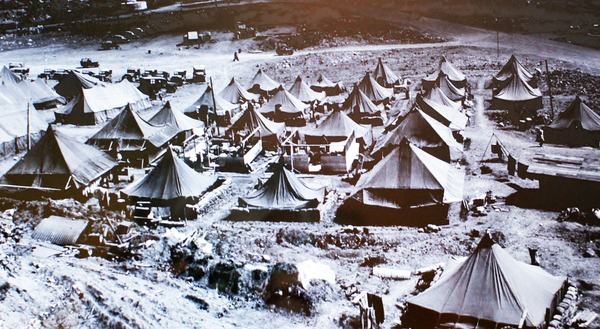
From the P-38, Conrad was upgraded to the P-51 and assigned to Iwo Jima. The Marines invaded Iwo Jima on February 18, 1945 and finally took the island on March 15, 1945. One of the primary reasons for taking the island is that it had three runways and was only 650 miles from Tokyo. As an emergency landing field for bombers attacking Japan, it saved more than 20,000 aircrew members before the war ended.
The 21st Fighter Group that Connie was assigned to landed on the island shortly after the Marines had secured it. They were assigned to a tent city for aircrews adjacent to their airfield. Early in the morning of March 26, 1945, just 11 days after the island was considered secured, some 300 Japanese soldiers, remnants of three different units, initiated a banzai attack. They came out of underground caves and surprised everyone, including Connie and four other officers in his tent, who quickly grabbed their carbines. Instantly Connie turned from a fighter pilot to an infantry soldier. Japanese grenades were falling all around their tent while it was being riddled with rifle fire. Outside they could hear Japanese soldiers shouting orders. For almost 45 minutes Mattson and his fellow pilots were pinned down. They fired on the enemy when they’d see them dart between tents. Their chance to escape came when a Marine recognized them as U.S. pilots and commanded the friendly fire to cease while they ran to the safety of the friendly lines. This was an unexpected “Welcome to WWII” as Connie preferred to do his fighting from the cockpit of his Mustang.
While flying out of Iwo Jima on July 15, 1945 in the P-51, Connie shot down a Japanese aircraft (Zeke) and in this and other aerial dog flights he damaged two other enemy aircraft and had two other probables (enemy aircraft that he’d engaged and damaged near fatally but wasn’t able to follow the aircraft down to the ground or that no one else could confirm).
After WWII, Connie chose to remain in the Service and was one of the first Army Air Corp pilots to fly jet aircraft. In 1947 he was assigned to the P-80 Shooting Star. This was a quantum leap from the P-51, although not as maneuverable, it was faster and preformed much better at altitude. Flying the early jets brought new experiences with their increased performance in their rapid climb rates and better handling characteristics at altitude. One challenge was flying from warm humid lower altitudes to the high altitude and then descending, when canopies often fogged over. The canopy heating systems today have eliminated that problem, but early on it was a more serious.
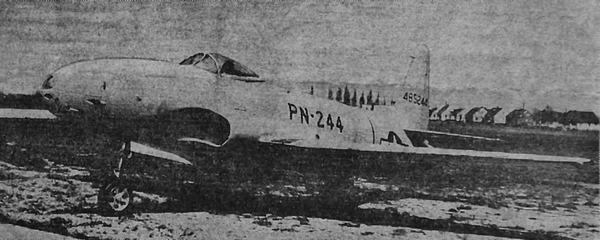
On one cross country flight in 1947, Connie’s P-80 Shooting Star fogged up and he was required to descend to a lower altitude. Jets preformed most efficiency at high altitude so the resultant descent greatly increased his fuel consumption, limiting his range. Such was the case with Connie having to declare an emergency descending and land at Peoria, Illinois, because of low fuel. Peoria’s runways were shorter than the 5,000 feet designated for the P-80, but Connie landed without incident. The Peoria Journal newspaper reported “Lieutenant Mattson displayed unusual skill in bringing his ship in on the 3,985 foot runway at Municipal Airport.”
Jet fuel was brought in from Chanute Field the next day and he was able to take off and make it to his planned destination. His was the first jet fighter to land at Peoria’s Municipal Airport and there was a “tense crowd” of 2,000 spectators on hand to watch his departure.
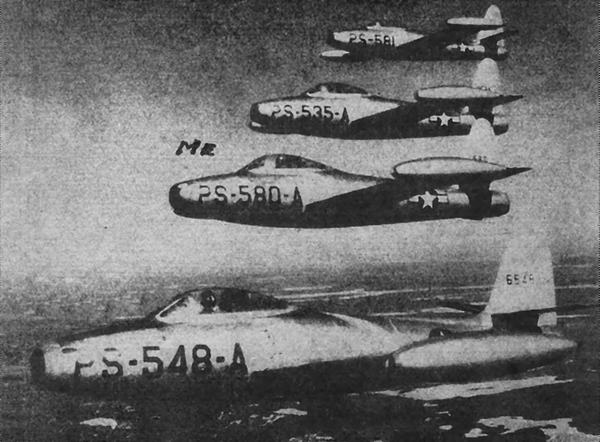
From the P-80 Shooting Star Connie upgraded to the F-84 Thunderjet in 1948 and was stationed back east at Dow AFB, Bangor, Maine. He enjoyed the upgrade and participated in many exercises and demonstrations flying the Air Force’s top jet. After flying the F-84 he was moved up to the more advanced, supersonic F-86A Sabre Jet in the fall of 1949 and reassigned to the 60th Fighter Squadron at Westover AFB, Massachusetts.
While getting checked out in the F-86A on February 17, 1950, his Sabre’s engine “burped” and the exhaust gas temp rose rapidly to more than 700 degrees on a formation takeoff a half-mile down the runway. He aborted the takeoff and was able to stop on the runway. The mechanics had tried to install a gun camera film during his preflight and couldn’t get the camera door shut. The gun camera on an F-86 is in the center bottom of the engine intake. They had a hard time getting the film in and closing the door but got it done … almost. About a half mile down the runway, the camera door popped open and it was sucked into the intake and engine. That caused the ‘burp’, and peaked the engine temp along with knocking out his Pitot static system, giving him zero airspeed. Had he continued the takeoff, the engine would likely have seized and he would have had to eject or ride his jet in. Neither of these options would have been safe or likely survivable so Connie’s quick assessment of the problem and correct action saved his life, the aircraft and possible damage to people and property off the end of the runway. His training paid off.
On March 24, 1951 the Korean War began with the North Korea’s Army crossing the 38th parallel into South Korea. In June 1951 his father fell at home and was badly injured and hospitalized. Connie had completed his training in the Sabre Jet and received authorization to fly out west on a cross-country training flight to Truax Field, Madison, Wisconsin. The F-86 didn’t have ‘long enough legs’ to make it nonstop from Westover so he landed at Selfridge AFB, Michigan, for a gas-n-go. This also gave him time to call his mother and let her know he’d be flying over Stevens Point on the way to Madison and the time he’d be there. His mother called the local paper, family, and friends so they could go outside and watch the fly by. The Point newspaper reported “Thunder and Lighting over City Today was Sabre Jet Aircraft”. It reported further …“The silver craft was piloted by Capt. Conrad E. Mattson, US Air Force, who flew from Westover Field, Massachusetts this morning to visit with his parents. … He was granted a weekend furlough to visit with his father who is very ill at St. Michael’s Hospital.” His father died five days later, July 25, 1951.
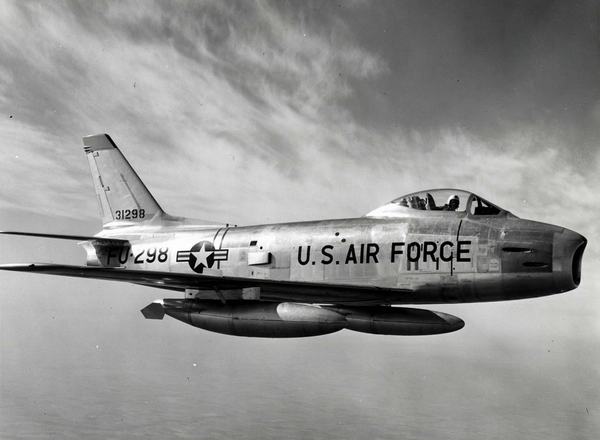
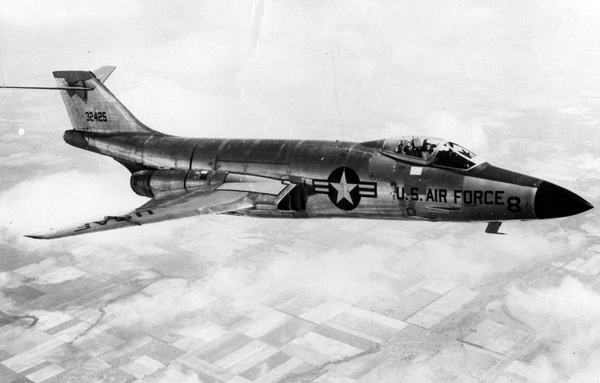
Connie Mattson, now a captain flying a top jet, was destined for a return to war. It was seven short years after WWII, things had changed and so had Connie. It had been only 8 years since graduating from pilot training a Luke AFB, Arizona. November of 1951 he was headed for a new air war in Korea’s Kimpo Air Base, flying our top jet. He was a flight lead and bagged his first MIG 15 while flying his F-86 Saber Jet This Joker’s Wild on March 11, 1952 and his second on the twelfth. The Headquarters Far East Air Forces, General Orders Number 251 dated May 22, 1952 read in part: “Captain Conrad E. Mattson, 335th Fighter-Interceptor Squadron, 4th Fighter-Interceptor Wing is officially credited with the destruction of one MIG-15 type aircraft in aerial combat near Munp’yong-Ni, Korea at 1010lcl on 11 March 1952. Leading a flight of four aircraft, Captain Mattson observed 16 MIG-15s crossing the Yalu River. Captain Mattson turned into a head-on firing pass, scoring numerous hits in the nose, fuselage and cockpit section of one MIG. The enemy formation scattered except for the one MIG which began to disintegrate. The crippled MIG went into a spin and crashed near Munp’yong-NI.”
That same document went on to report about Captain Mattson downing a second MIG-15 aircraft in aerial combat on the following day, 12 March 1952 at 1035lcl again in a head on pass, this time over Changim-Ni, Korea.
In a letter home to his mother on March 31, Connie told about one of his F-86 vs MIG 15 engagements as follow: “I hadn’t shot any MIGs down recently, but have managed to hit two more getting credit for a damaged and a probably destroyed. The damaged I hit coming head-on. He was smoking as he passed just over the top of me. Other MIGs kept me from going after him. The “probable” I hit heavily. MIGs kept me from continuing my attack on this one too, but when I last saw him he was diving inverted at a low altitude right for the City of Antung, which is on the Manchurian side of the Yalu River. My score now is 2 destroyed and 2 probably destroyed and 2 damaged.”